The Kolkata Municipal Corporation (KMC) grades heritage buildings I, IIA, IIB and III. Any addition, alteration, repair or restoration proposal for a graded building goes through the Environment and Heritage Department and the Heritage Conservation Committee. Find out whether your house is graded before you plan any work, because the route and the time depend on it.
This guide reflects the KMC circular reported in April 2025 and a Calcutta High Court order of June 2025. Heritage rules are revised, and a draft or a circular may have changed since. Ask KMC for the current procedure before you apply.
What are the KMC heritage grades?
KMC lists graded heritage structures in four grades: Grade I, Grade IIA, Grade IIB and Grade III. Grade I premises sit at the top of the ladder and attract the highest scrutiny. The 2025 circular reported by Millennium Post sets two routes:
| Grade | Route for a plan proposal |
|---|---|
| IIA, IIB, III | Environment and Heritage Department, then the Heritage Conservation Committee, then the Mayor-in-Council, then the Building Department |
| I | Directly to the Environment and Heritage Department, and the case proceeds on Mayor-in-Council resolutions that rest on the committee’s recommendations |
An official quoted in the report calls the Grade I route “a higher scrutiny level and restriction”. The report does not set out in full what each grade allows, so ask KMC for the grade’s conditions in writing.
How does a proposal for a graded building move through KMC?
For Grades IIA, IIB and III the circular describes five steps:
- The owner submits the proposal to the Environment and Heritage (E&H) Department with the supporting documents.
- The Building Department does a preliminary scrutiny and sends its observations to E&H.
- E&H places the proposal before the Heritage Conservation Committee (HCC).
- On the committee’s recommendation, the proposal goes to the Mayor-in-Council for a final resolution.
- E&H removes the “heritage lock” and tells the Building Department, which then processes the case under the usual KMC norms.
The circular covers proposals for addition, alteration, new construction, demolition, repair and restoration. It also adds a heritage clearance step, called Part-AA, to the e-KMC-2.0 online system. For the ordinary sanction process that follows, read the guide to KMC building plan sanction.
What documents does a heritage proposal need?
The documents tell KMC what the building is and what condition it is in. The circular lists:
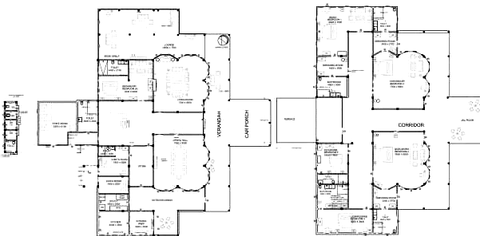
- the history and significance of the building;
- its use and ownership;
- maintenance records;
- photographs;
- its legal status;
- a condition assessment;
- drawings and restoration details.
An architect prepares most of these. A good set begins with a measured survey and a photographic record, then a condition report that separates damage from decay, then drawings that mark what stays, what is repaired and what is new.
Who should supervise the work?
A conservation architect should lead the design and the site work. The Calcutta High Court order in APOT/157/2025 with WPO/379/2025 shows how seriously the system takes this. The case concerned a 190-year-old Grade I school building where a ceiling had collapsed. The Court directed that the damaged areas in KMC’s inspection report of 9 June 2025 be repaired under the supervision of a Conservation Architect and a Structural Engineer nominated by the KMC Commissioner, at the school’s cost, with progress reports to the Single Bench every 45 days.
The order concerns one building, and it does not set a rule for every owner. It does show what a court expects when a graded building is at risk.
Public bodies that empanel conservation architects set their own bar. The Delhi Development Authority’s 2022 notice asked for at least one partner registered with the Council of Architecture, a postgraduate qualification in urban or architectural conservation or heritage management, and conservation consultancy experience in the preceding five years. Its scope of work lists a survey, measured drawings, a conservation report, designs, working drawings, estimates and tender documents.
How do you renovate an old house in Kolkata that is not graded?
An ungraded old house needs the ordinary KMC sanction, but the same care applies. Start by asking KMC whether the building appears on any heritage list, since a graded building needs the heritage route and an ungraded one does not.
Then follow a sequence that suits any old masonry house:
- Record the house before you touch it: measured plans, photographs, and notes on materials.
- Have a structural engineer inspect it, with attention to roofs, beams, damp and cracks.
- Decide what is repaired and what is replaced, and write that down in the drawings.
- Match new work to old: mortar, plaster, joinery and floors should be specified to suit the existing fabric.
- Test a repair on a small patch before you apply it to a whole wall.
Lime plaster was the usual finish on masonry built before cement became common. A conservation architect specifies the plaster and mortar to suit the existing wall, so that a repair does not stress the old work around it. The studio’s heritage conservation service covers this kind of specification and site supervision.
What is adaptive reuse?
Adaptive reuse is the conversion of an old building to a new use while keeping its character. The aim is to give the building a reason to be maintained, as a home, an office, a school or a stay for guests.
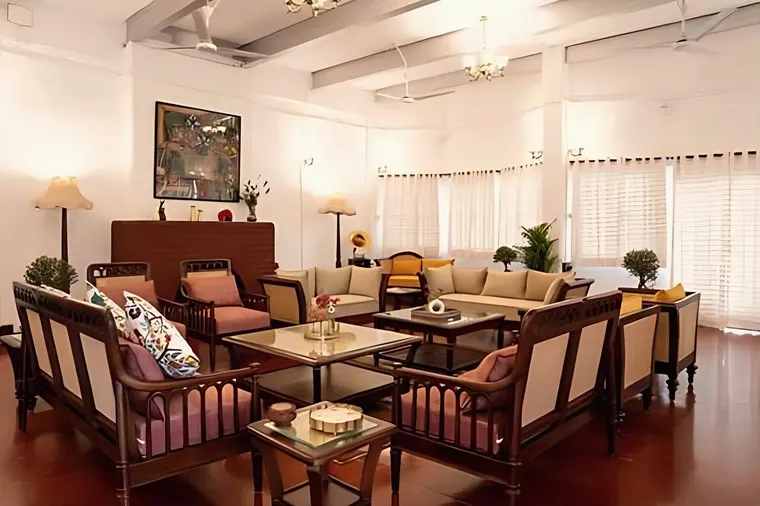
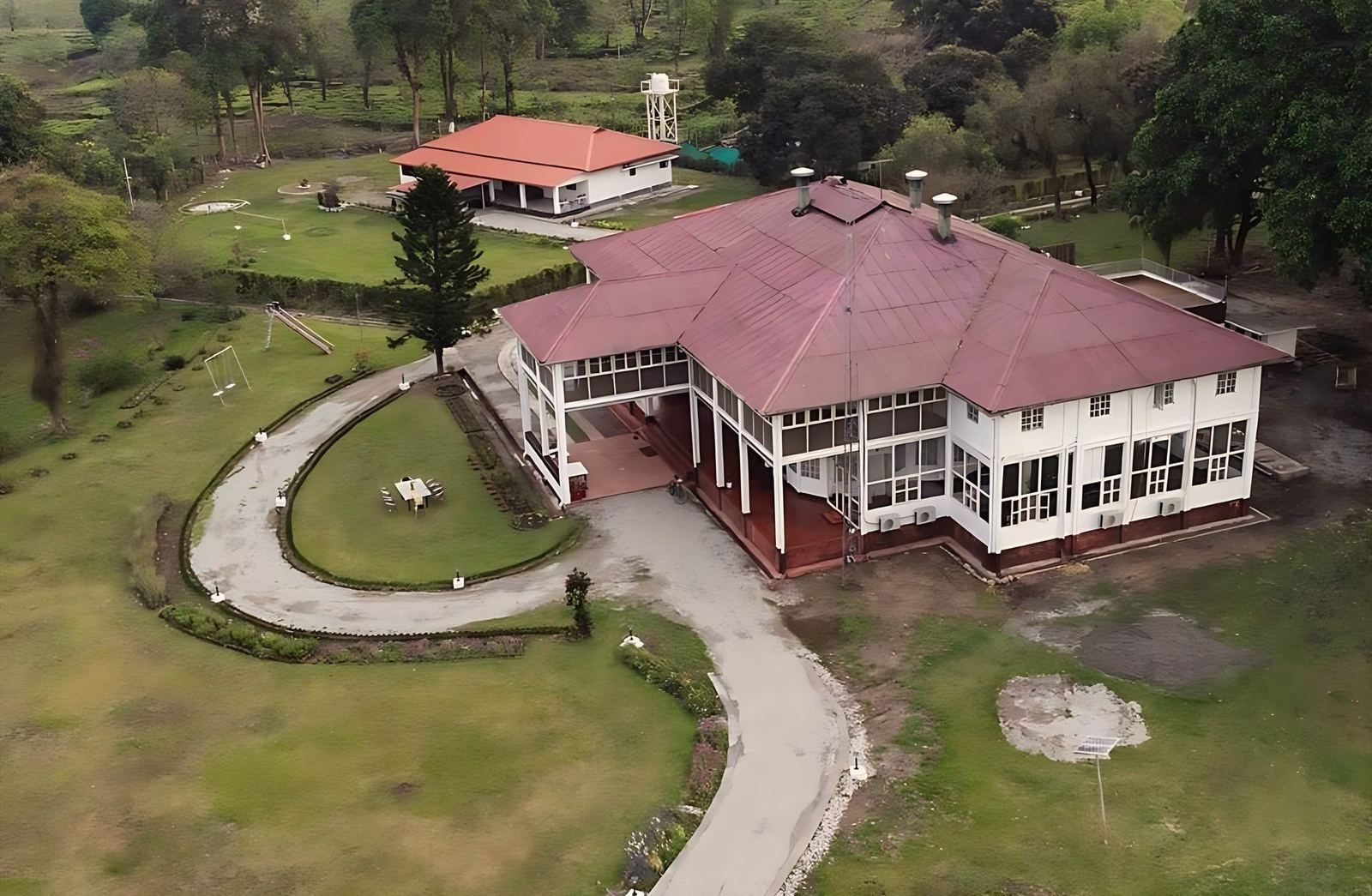
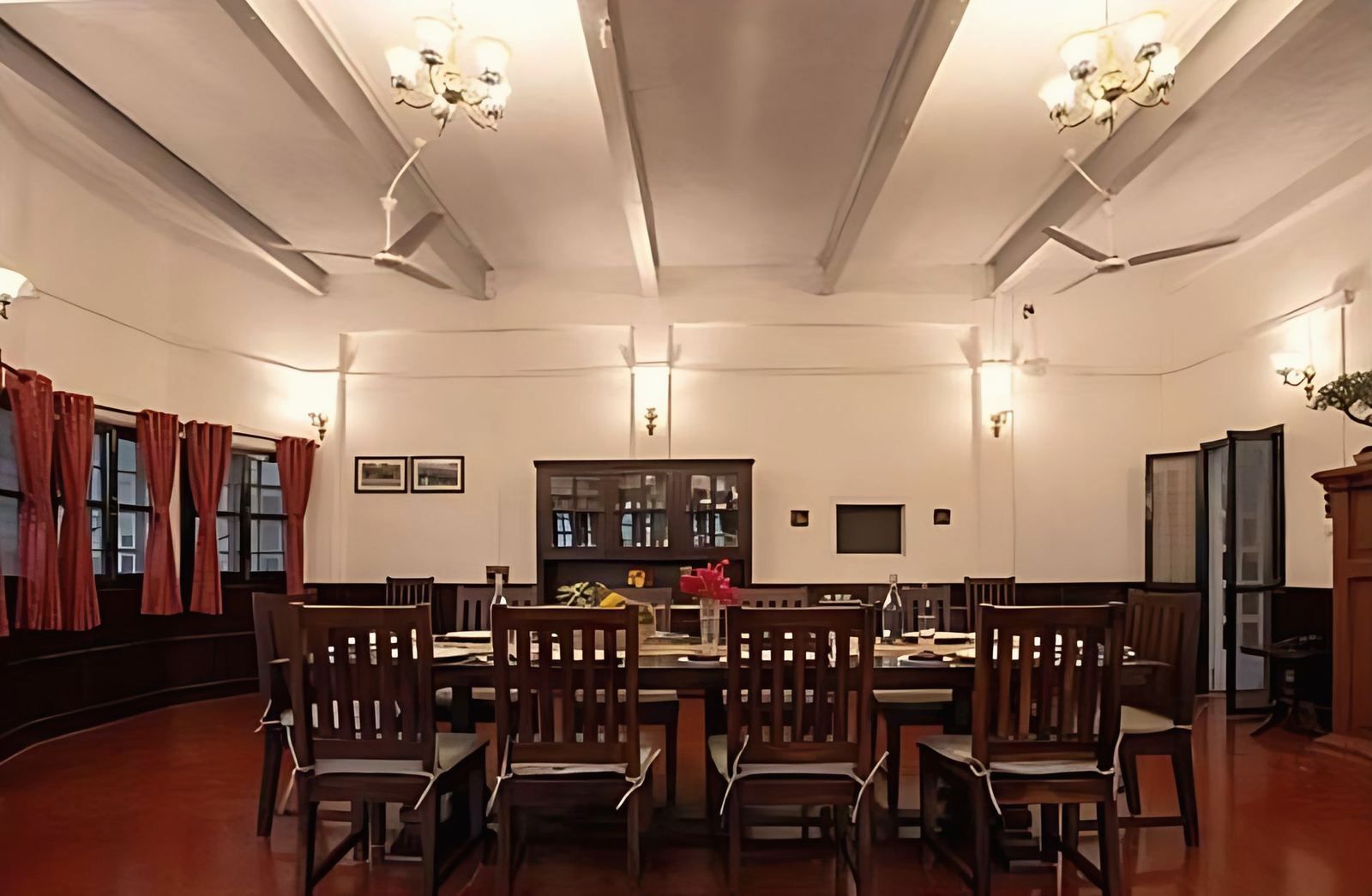
The studio’s Budlapara Tea Retreat in the Udalguri district of Assam shows the method. The bungalow had stood for 96 years when the Asian Tea Group asked the studio to open it to guests. The studio kept the colonial character, the proportions, the glazed verandahs and the red oxide floors, and fitted bathrooms, lighting and furnishings within them. The curving drive and the lawns remain the approach. Across 14,000 sq ft on two floors, the house now works as a heritage homestay, and the Ministry of Tourism, Government of India, gave it a Gold Star Recognition under the Incredible India initiative.
Read the full story on the Budlapara page and the companion guide to tea garden bungalow restoration.
Does restoration always mean an old building?
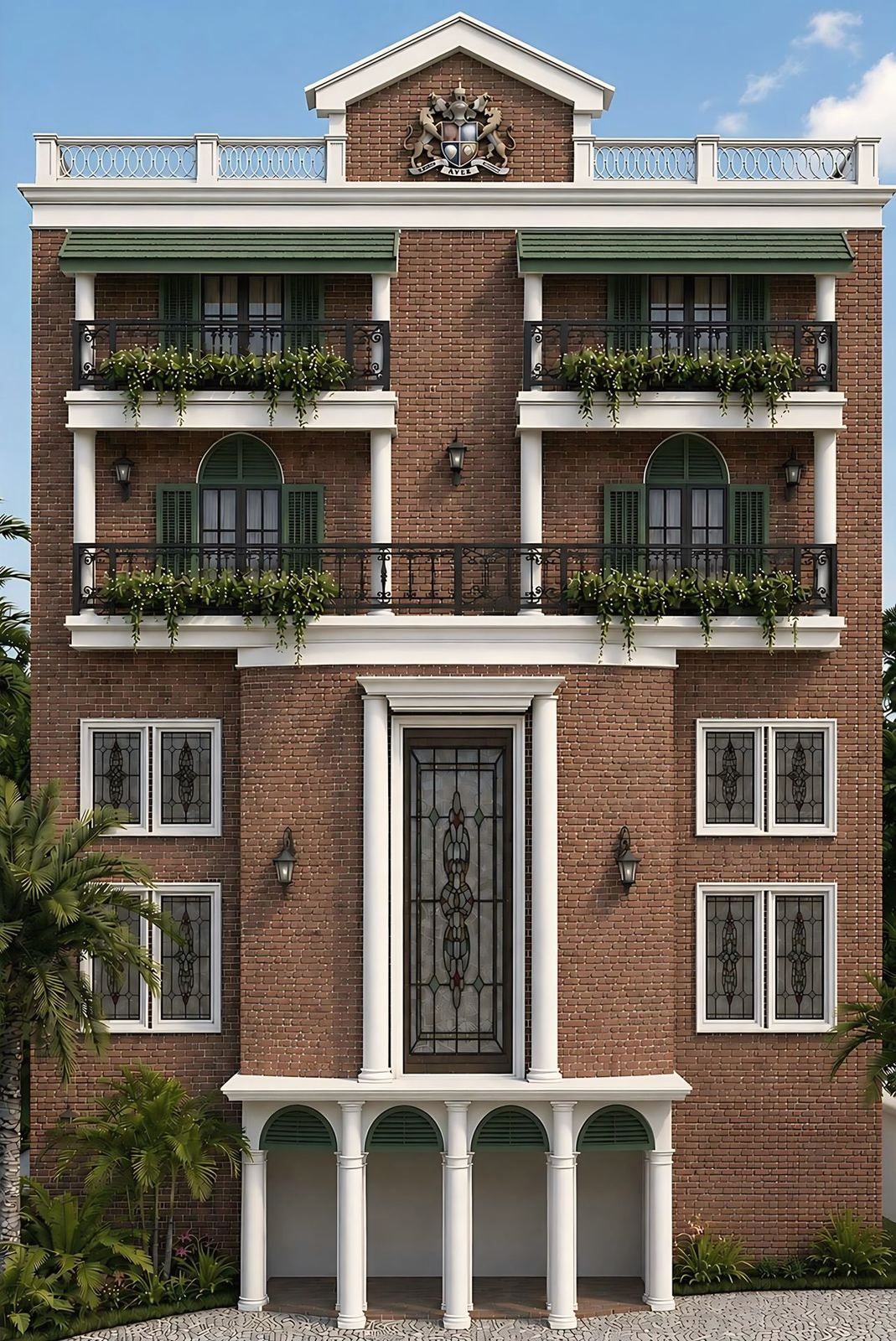
No. A new house can borrow a heritage vocabulary without restoring anything. The studio’s Rajbaari residence on Meghnad Saha Sarani is a new house of ground plus four floors, 59 ft high, with 16,958 sq ft of built-up area on a plot of 11,306 sq ft. The family asked for a house that remembers the Rajbaari, the zamindar palaces of Bengal, with stately proportions, ornate detail and a colonial-era vocabulary.

A colonnade, three brick arches with stained glass, columned balconies and a pediment give it presence on the street. Two facade options were drawn, and the project is ongoing and shown in visualisation. It sits in the studio’s heritage practice as an interpretation of a tradition, and it is a different job from conserving an original. See the Rajbaari residence.
What should an owner do first?
Check the grade, then gather the history and the papers, and then ask a conservation architect for a condition survey before any repair. The survey tells you what the building needs, and it gives KMC the evidence it asks for.
To discuss an old house in Kolkata or West Bengal, write through the contact page.