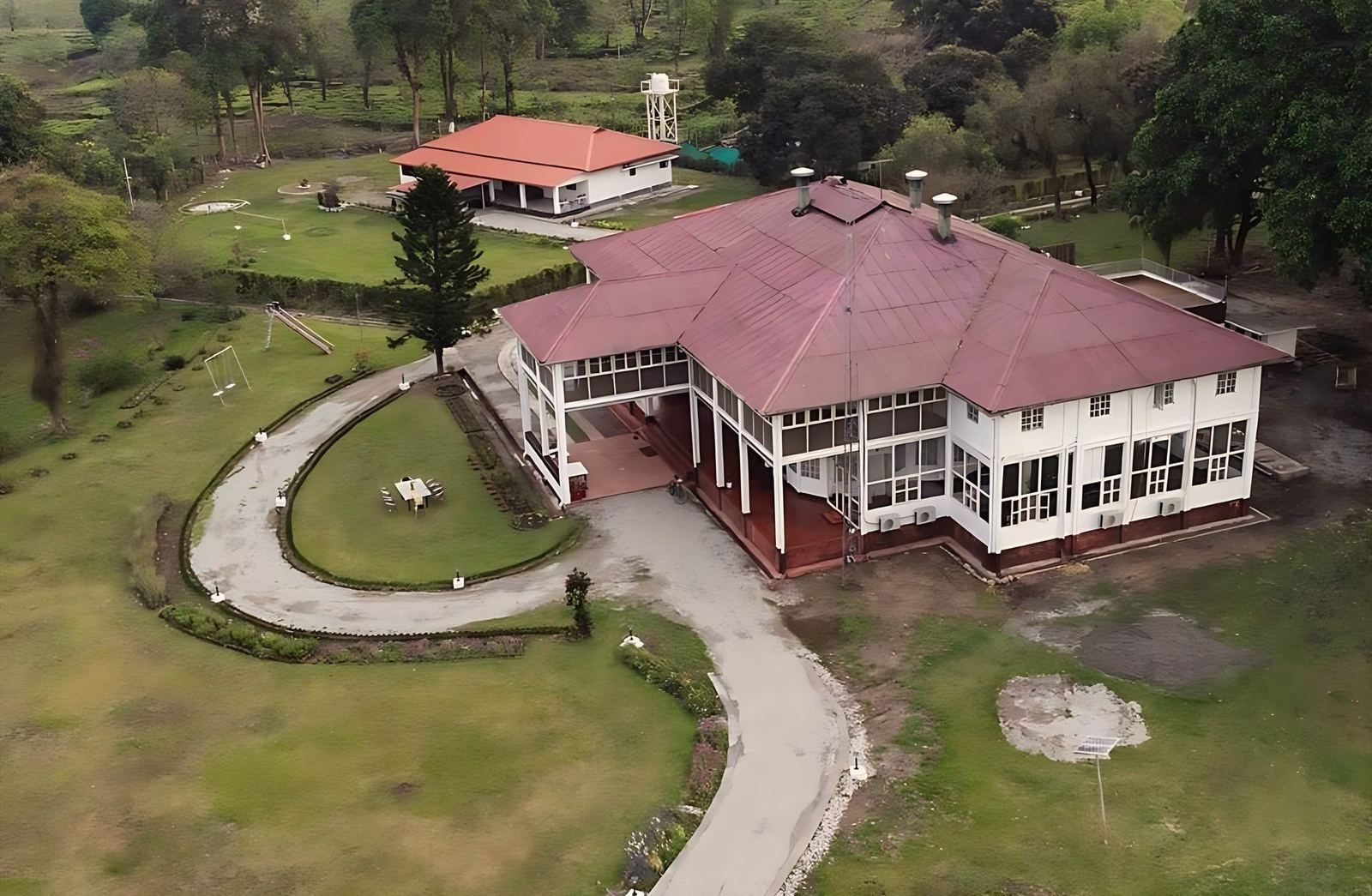
Assam allows up to 5 per cent of a tea estate’s land to serve other activities, among them eco-friendly tea tourism, and a 2026 amendment Bill would extend the idea to leasing. A bungalow conversion also meets homestay rules, tourism classification and heritage care. The studio converted a 96-year-old estate bungalow at Budlapara in Udalguri district.
This guide draws on press reports of the land rule and the homestay framework, on the Ministry of Tourism’s classification guidelines, and on the studio’s own project. Land and tourism rules change quickly in Assam, so confirm the current text with the Revenue and Tourism departments before you commit.
What is the 5 per cent tea land rule?
The rule lets a tea estate put a small share of its land to non-tea use. Pratidin Time reported on 7 August 2022 that the Assam Fixation of Ceiling on Land Holding Act, 1956 was amended so that up to five per cent of the total garden area could be used for activities including “promotion of eco-friendly tea tourism”. The report says the permission applies to land on which tea plantation is not possible and which lies fallow and unutilised.
The same report lists other permitted uses: agricultural and horticultural crops, animal husbandry and fisheries, green power, social infrastructure such as wellness centres and schools, and food processing units. It sets the cap at 5 per cent of the total garden area.
A further step followed in 2026. NorthEast Now reported on 28 July 2026 that the Assam Fixation of Ceiling on Land Holdings (Amendment) Bill, 2026 had been introduced in the Assembly. If passed, it would let owners use or lease up to 5 per cent of their land for projects approved by the state government, including tea tourism, for a period the government decides. Ask the Revenue Department whether the Bill has been enacted and in what form.
Two questions a bungalow owner should put to the department in writing: whether a bungalow already standing on estate land counts against the 5 per cent, and which approvals a tourism use needs in the district.
What does a tea planter bungalow look like?
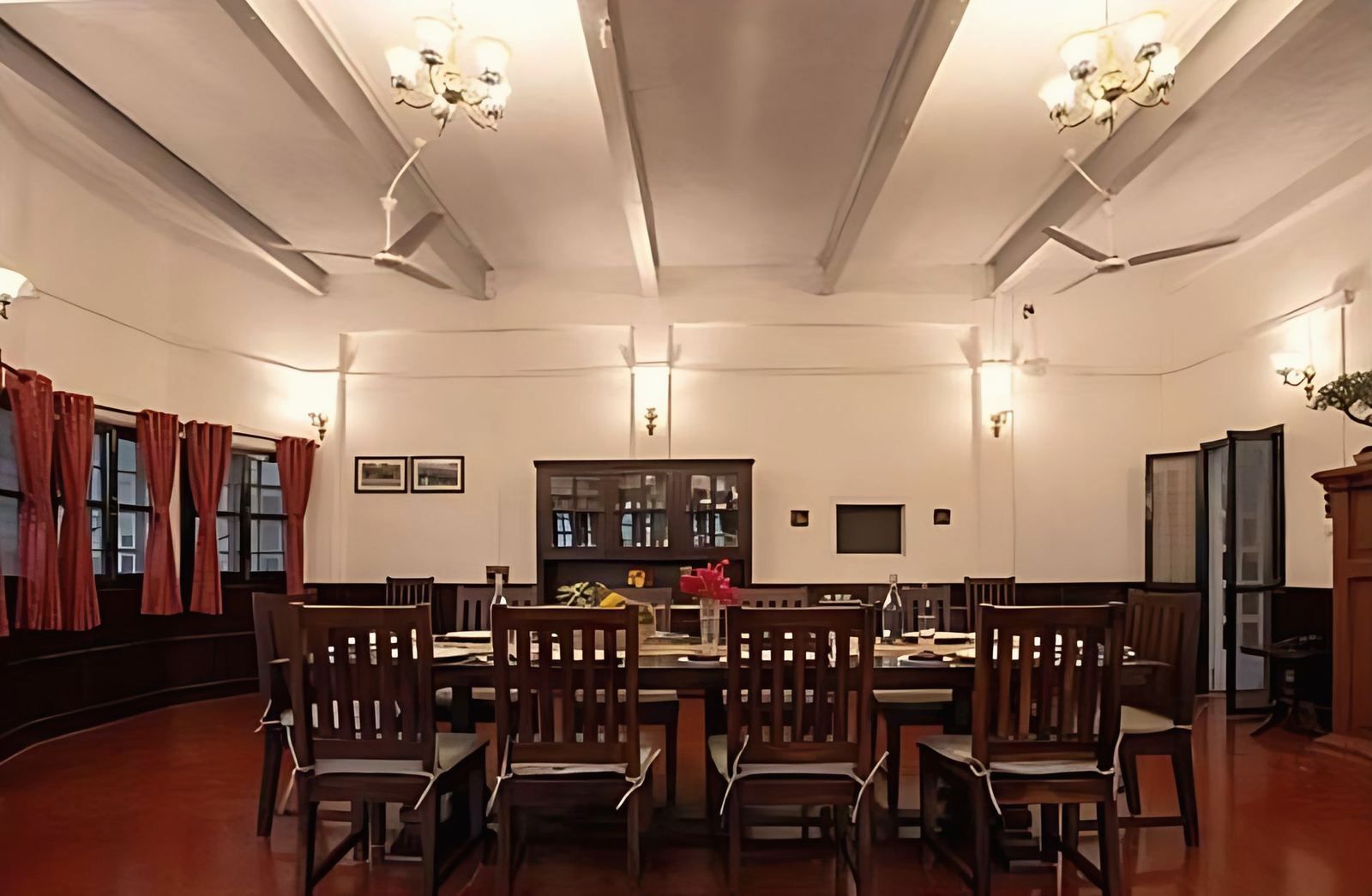
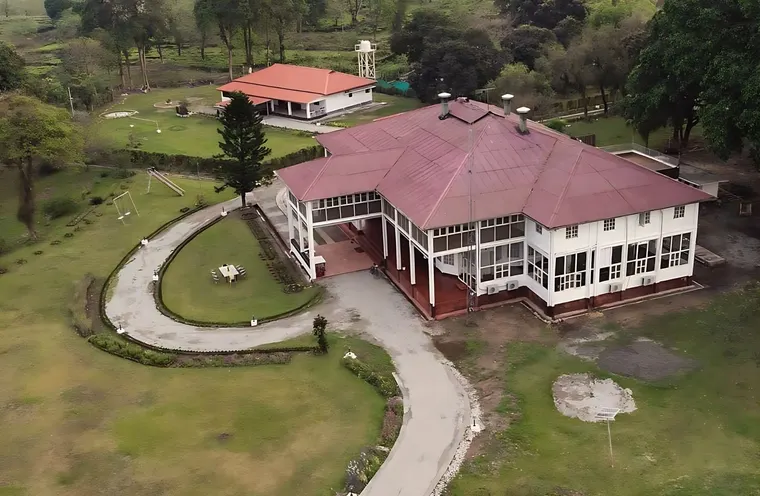
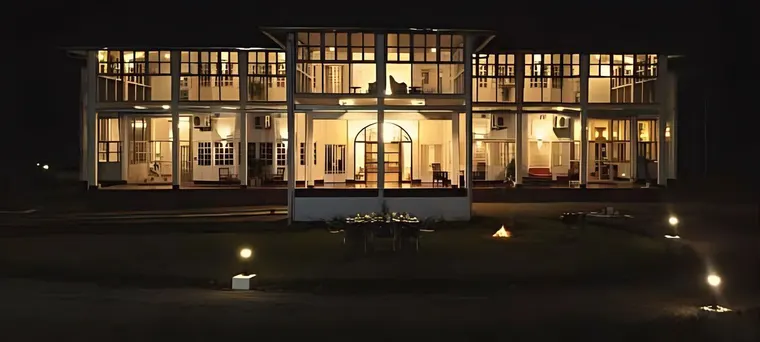
The studio’s work at Budlapara shows what a colonial tea-estate bungalow in Assam can hold. The house had stood for 96 years when the Asian Tea Group asked the studio to open it to guests. Its character rests on proportions, glazed verandahs, red oxide floors, a curving drive and lawns, which are the features the studio chose to keep.
The house is on two floors, 41 ft high, with 14,000 sq ft of built-up area. The studio’s page records the colonial character as the quality that made the house worth the journey, and the design question as how to add what a paying guest expects without removing it.
How do you convert a tea estate bungalow into a homestay?
You keep what gives the house its character and fit the guest comforts inside it. At Budlapara the studio worked room by room: the colonial character, the proportions, the glazed verandahs and the red oxide floors stayed, and bathrooms, lighting and furnishings were fitted within them.
A conversion usually follows this sequence:
- Survey the bungalow: measured plans, structure, roof, damp and drainage, and a record of original features.
- Decide what must be kept, what can change and what is new, and mark it on drawings.
- Check the land position with the estate and the Revenue Department, including the 5 per cent rule.
- Check the registration route for a homestay or a hotel in Assam, and the fire safety conditions that go with it.
- Plan the rooms, bathrooms, services and kitchen inside the existing structure, with new services routed so that they do not cut into original floors and walls.
- Plan the landscape and the approach, since the drive and the lawns are part of the experience.
- Supervise the work on site, because old fabric surprises a contractor.
For the general approach to old buildings in West Bengal, read the guide to heritage building restoration in Kolkata.
What homestay rules apply in Assam?
Assam’s cabinet approved new homestay registration rules on 23 June 2026. Hindusthan Samachar reports that owners register through an online portal and renew every three years. The room limit is reported in two ways. India Today NE says the cabinet made it mandatory for establishments to have at least eight rooms to qualify. Hindusthan Samachar says the cabinet raised the maximum number of rooms in a homestay from six to eight.
The two reports cannot both describe the rule. Read the notified rules before you fix the room count of a bungalow conversion. For the Ministry of Tourism route, the guidelines allow one to six lettable rooms, 12 beds, for a classified Incredible India homestay, with Silver and Gold grades. The comparison of all three rule sets is in the guide to homestay design in India.
Why does the landscape matter in a bungalow conversion?
The approach to a planter’s bungalow is part of the building. A guest meets the drive and the lawns before the verandah, and a conversion that adds parking, service roads or lighting without care can damage that first impression. At Budlapara the curving drive and the lawns remain the approach, and landscape is one of the services the studio lists for the project.
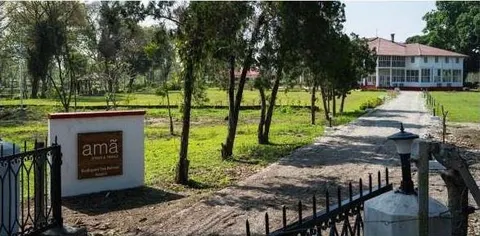
In practice this means placing guest parking and service access away from the main view, keeping mature trees, and planning outdoor lighting so that the house is seen at dusk without glare. Treat the grounds as a drawing set of their own, with levels, drainage and planting marked beside the building plans.
Is there funding for tea tourism?
A scheme exists in principle. In an interview published on 17 August 2025, the Assam tourism minister, Ranjeet Kumar Dass, said the Tea Tourism Infrastructure Development Scheme “offers a 50 per cent subsidy (up to Rs2 crore per tea estate) to upgrade tourist facilities”. The scheme document itself was not part of the interview, so check the department for current eligibility and terms.
What did the studio do at Budlapara?
The studio handled architectural conservation and adaptive reuse, with interiors and landscape. The bungalow works as a heritage homestay across 14,000 sq ft on two floors. The Ministry of Tourism, Government of India, gave the retreat a Gold Star Recognition under the Incredible India initiative.
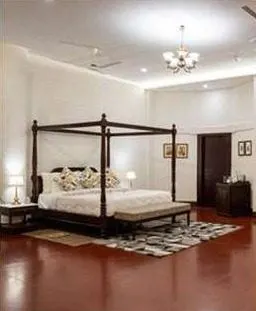
Mohit Agarwal, Director of the Asian Tea Group, said of the project: “A beautiful, welcoming retreat that reflects our estate’s legacy.” The studio’s page lists scope across heritage, architecture, interiors and landscape. See the project at Budlapara Tea Retreat.
Where does the studio work in Assam?
The studio works in Assam in Bongaigaon, the Udalguri district, Jorhat, Guwahati and Dibrugarh, besides its base in Kolkata. Its Guwahati and Assam page sets out the work there. For conservation scope, read the heritage conservation service and the landscape design service.
What should an estate owner do first?
Photograph and measure the bungalow, collect the estate’s land papers, and write down the use you have in mind and the number of rooms. Then ask a conservation architect for a condition survey and a first scheme. To start, write through the contact page.