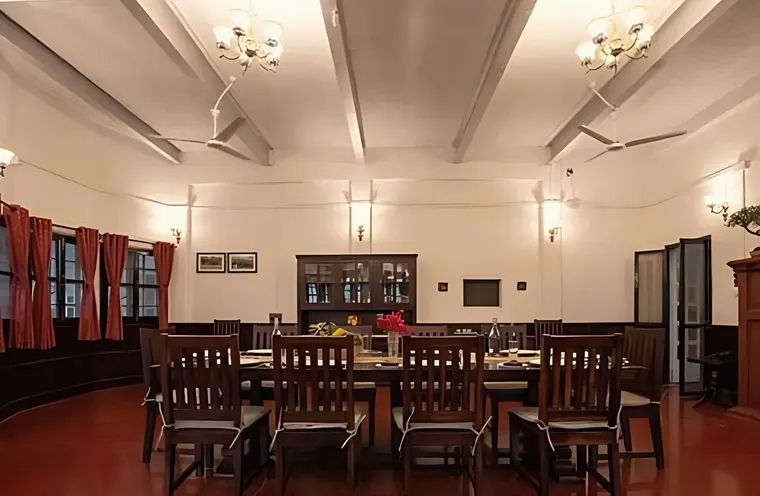
Adaptive reuse means changing an old building to suit a new use while keeping what makes it significant. The Burra Charter accepts it only where the impact on significance is minimal. In Kolkata, work on graded heritage buildings goes through KMC’s Heritage Conservation Committee, and structural checks follow IS 15988:2013 for concrete and IS 13935:2009 for masonry.
The texts below were read on 13 November 2026. Several are news reports of procedures, flagged where they apply, so ask the authority for the current rule before you plan work. The studio’s own example is the Budlapara Tea Retreat in Assam, drawn from its project page.
What is adaptive reuse?
Adaptive reuse is giving an old building a new use, while it keeps its character. The Burra Charter of Australia ICOMOS (2013) states it in two articles. Article 1.9 says adaptation means changing a place to suit the existing use or a proposed use, and the explanatory note says adaptation for a new use is often referred to as adaptive re-use. Article 21.1 says adaptation is acceptable only where it has minimal impact on the cultural significance of the place, and article 21.2 says it should involve minimal change to significant fabric, achieved only after considering alternatives.
The Charter also asks for a compatible use, defined in article 1.11 as a use that respects the cultural significance of a place with no, or minimal, impact on it. Article 7.2 says a place should have a compatible use, and article 22 says new work should be readily identifiable as such.
India has its own text. INTACH’s Charter for the Conservation of Unprotected Architectural Heritage and Sites in India says on its principles page that a historic building and site can be suitably adapted and modified for an appropriate reuse, with the traditional context kept as far as possible. A reuse decision, it says, should be taken in consultation with INTACH’s Advisory Committees. The Burra Charter is an Australian document and is used here as a definition, not an Indian rule.
Which approvals apply to an old building?
It depends on its status. Three routes recur in India:
- KMC heritage grading (Kolkata). Millennium Post reported on 17 April 2025 how KMC processes plans for addition, alteration, new construction, demolition, repair or restoration of Grade IIA, IIB and III heritage structures. The applicant submits property documentation, a condition assessment and drawings with repair and restoration details to the Environment and Heritage department. The Building department scrutinises them, the Heritage Conservation Committee recommends, the Mayor-in-Council passes a resolution, and the department then removes the heritage lock so the plan proceeds under normal KMC norms. The report gives no fees or timelines. The post on heritage building restoration in Kolkata goes into more detail, and the post on renovating an old house in Kolkata covers ordinary alteration rules.
- State heritage law. The Department of Municipal Affairs page on conservation of heritage buildings links the West Bengal Heritage Commission Act, 2001, in effect from 1 August 2001, and the Heritage Conservation Committee under section 23C of the West Bengal Municipal Act, 1993. Its topics include demolition, permission for repairing, addition and alteration, change of use of a heritage building, and new construction within the property.
- Protected monuments. The Ancient Monuments and Archaeological Sites and Remains (Amendment and Validation) Act, 2010, inserted section 20A, a prohibited area of 100 m from a protected monument, and section 20B, a regulated area of 200 m beginning at the limit of the prohibited area. The National Monuments Authority and heritage bye-laws sit behind them. A building near a protected monument needs the Archaeological Survey of India’s advice.
A change of use needs separate sanction as well. For a heritage hotel, the Ministry of Tourism’s 2018 guideline on Legacy Vintage Hotels defines such a hotel as built with materials from properties built before 1950, with at least 50 per cent of the material from heritage buildings. Other categories exist and were not confirmed here. The Assam rules for a tea-estate bungalow that is not a protected monument were not part of this research, so ask the district administration and the state heritage department.
How are old structures checked?
Check the structure before you plan the new use, since the use sets the loads. Two Indian standards give guidelines:
- IS 15988:2013 covers seismic evaluation and strengthening of existing reinforced concrete buildings. Clause 1.2 gives a method to assess whether a building reaches an adequate level of life safety for occupants, through a preliminary and then a detailed evaluation. Clause 7.1.2 says the present-day strength of materials is evaluated by on-site non-destructive testing and laboratory analysis of samples, and the field tests are usually only indicative. A detailed evaluation is recommended for a building of six storeys or higher, or one that fails the preliminary evaluation.
- IS 13935:2009 covers seismic evaluation, repair and strengthening of masonry buildings. It covers selection of materials and techniques for repair and strengthening of damaged buildings and assessment and retrofitting of existing masonry. The techniques include grouting, through-stones and bar insertion, and the text mentions masonry in mud or weak lime mortar.
Both are guidelines and not a KMC requirement to audit a private building. Kolkata is in seismic Zone III in the IS 1893 (Part 1): 2002 table, as the post on soil tests and foundation types notes. A structural engineer chooses the methods, and they should survey before the architect fixes the layout.
What changes in the building and what stays?
Decide first what is significant, then fit the new use around it. A working order:
- Record the building: measured drawings, photographs and a note of what is original and what is later.
- List the features that carry its character, such as proportions, verandahs, floors, joinery and the setting.
- Test the structure and services.
- Check that the new use is compatible, by the Burra Charter’s test of minimal impact on significance.
- Place new services inside existing rooms where possible, and make new work readable as new.
- Put the approvals in order, grade by grade or monument by monument.
Where damp and old plaster are involved, treat the cause before the finish. The post on damp and seepage in monsoon houses covers moisture, and the post on lime plaster in old and new buildings covers one material often found in old walls.
What does a worked example look like at Budlapara?
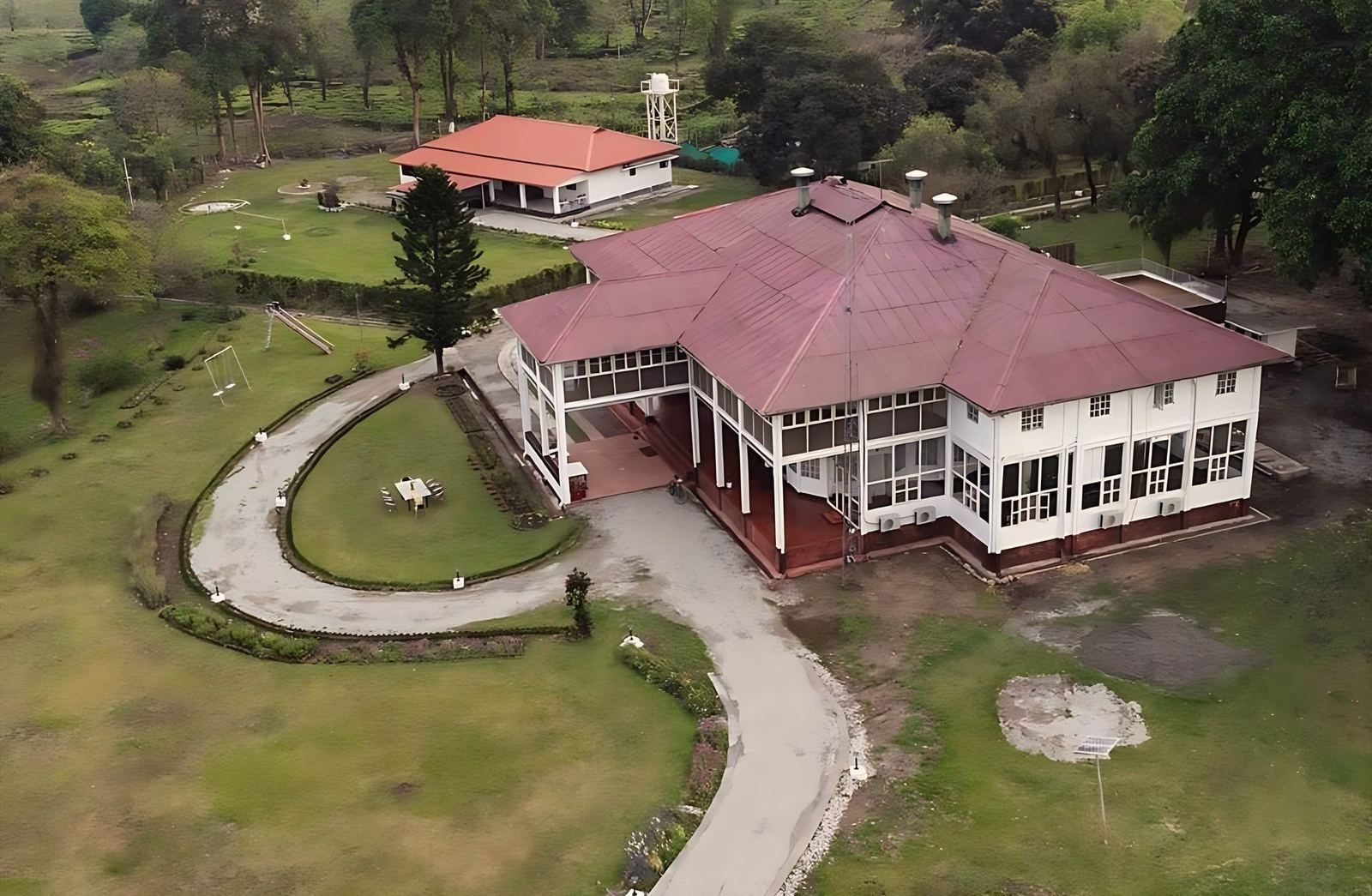
The Budlapara Tea Retreat is the studio’s example of adaptive reuse. The bungalow stands on a tea estate in the Udalguri district of Assam, and it had stood for 96 years when the Asian Tea Group asked the studio to open it to guests. The question the studio put was how to add what a paying guest expects without taking away what made the house worth the journey.
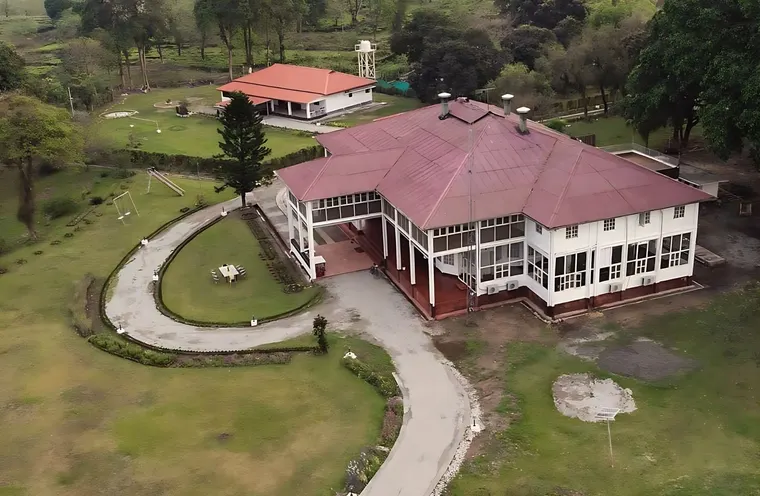
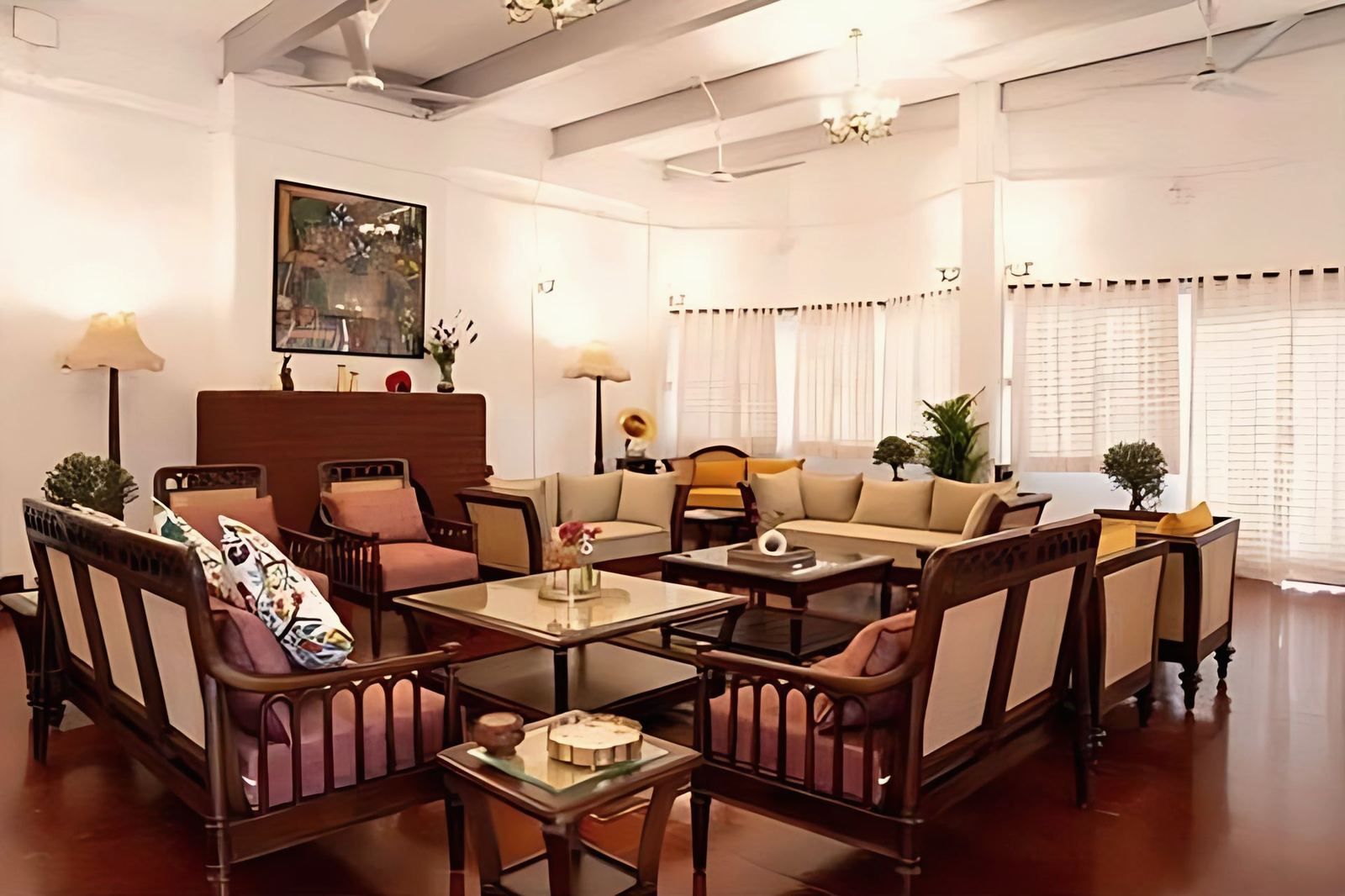
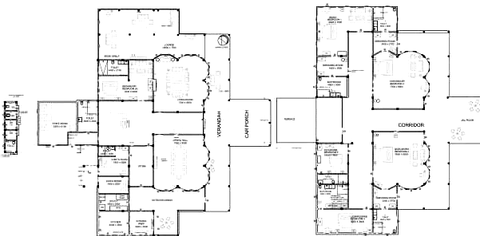
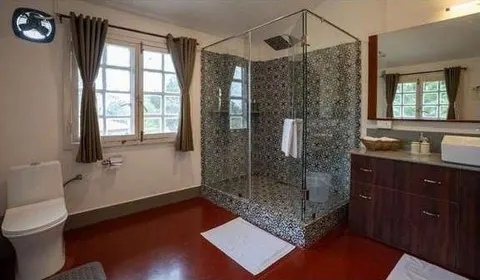
The answer was given room by room. According to the project page, the colonial character, the proportions, the glazed verandahs and the red oxide floors were kept, and bathrooms, lighting and furnishings were fitted within them. The curving drive and the lawns remain the approach. The house covers 14,000 sq ft over two floors, 41 ft high, and the studio’s scope was architectural conservation and adaptive reuse. The Ministry of Tourism, Government of India, gave the retreat a Gold Star Recognition under the Incredible India initiative. Compared with the Burra Charter, the pattern is the one it describes: a compatible use, the significant fabric kept and new services placed inside it. The project page has more photographs, and the heritage conservation service page describes the scope.
The post on tea estate bungalow restoration and homestay covers the Assam case further.
What to do next
If you hold an old building you want to reuse, collect its sanction papers, any heritage grading and a set of photographs, then ask an architect to prepare a short significance and condition note before drawing a new layout. The heritage conservation service page describes the studio’s work, and the contact page is the place to send the details.