In West Bengal’s hill municipalities, rule 157 of the 2007 building rules asks for soil testing and a slope stability certificate on slopes of 30 degrees and above, and rule 167 limits cuts to 4, 6 or 8 m by soil. The 2026 homestay policy covers 1 to 8 rooms in rural areas. Larger resorts register as other accommodation.
A resort in the hills of eastern India answers to several authorities at once: the building rules for slope and drainage, tourism departments for registration, and forest or eco-sensitive-zone offices near protected areas. The texts were read on 13 November 2026. Several are news reports of notifications, which is said wherever it applies, so check the notified text with the authority before you design to it.
Which tourism registration applies to a hill resort or homestay?
It depends on the number of rooms and where the property stands. The West Bengal Homestay Policy 2026 defines a homestay as an accommodation facility in a rural area where the owner lets one to eight rooms (16 beds) with toilet facilities exclusively for tourists. Its main points:
| Point | West Bengal Homestay Policy 2026 |
|---|---|
| Rooms | 1 to 8, each with an attached bathroom; a unit over eight rooms is not eligible and applies under another tourism accommodation category |
| Minimum areas | 120 sq ft double room, 100 sq ft single room, 30 sq ft bathroom |
| Registration | Online; fee ₹1,000 for Category A (Gold) and ₹500 for Category B (Silver); valid 3 years |
| Urban areas | No fresh homestay registration in urban areas |
| Premises | Leased, rented or sub-let premises are not permitted |
| Materials | Preference for local materials, vernacular architecture and renewable energy |
The copy of the policy on the Department’s site is marked final, but the commencement date is left blank in it, so confirm the notification date and fees with the Department of Tourism. Clause 16 also says special safeguards apply to eco-sensitive, forest, coastal and hill destinations, without giving the details.
In Assam, the cabinet approved the Assam Tourism Accommodation (Development and Registration) Rules, 2026 on 23 June 2026, with single-window registration, according to news reports. India Today NE says the rules require at least eight rooms to register, while two other reports give no room limit. An older Sivasagar district guideline allowed one to six lettable rooms. The rules’ text was not available, so check the room limits with the Assam Tourism department.
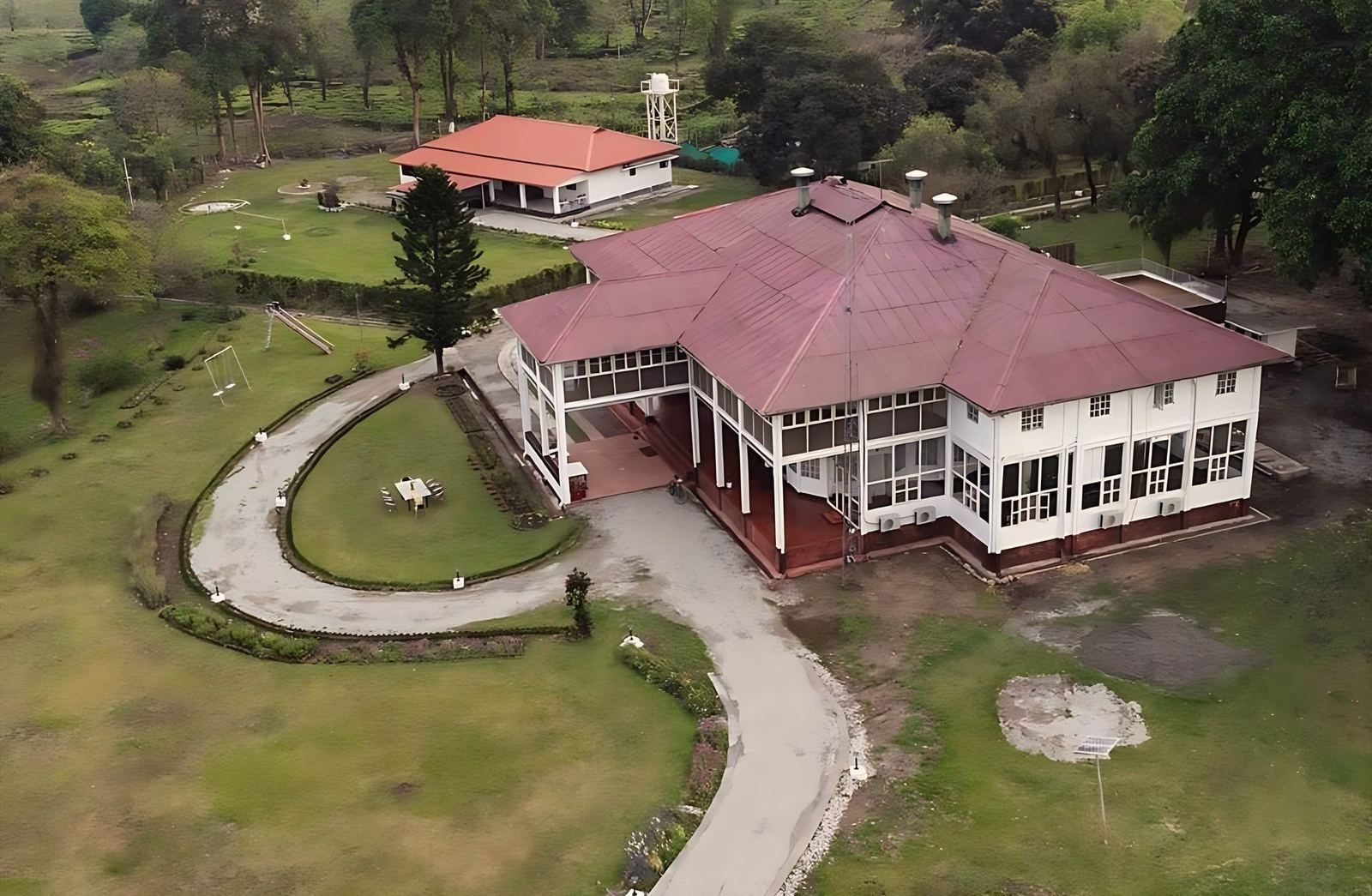
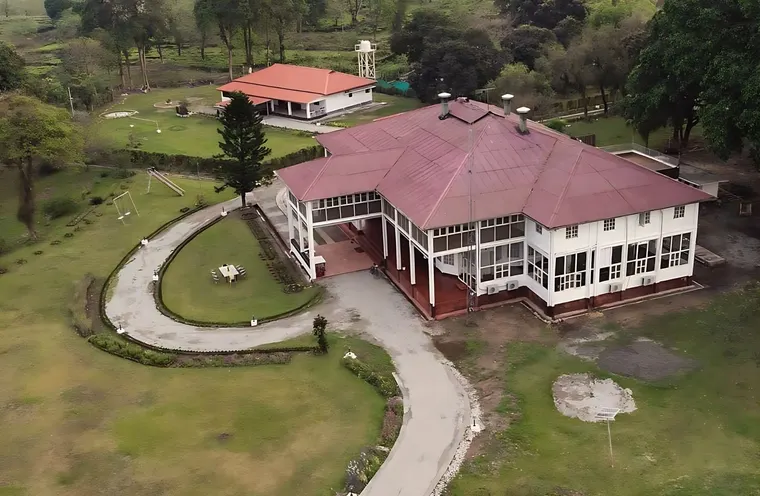
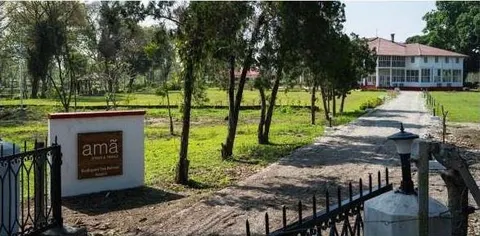
The Ministry of Tourism’s Incredible India Bed and Breakfast and Homestay scheme has Silver and Gold categories. An undated copy of its guidelines gives one to six rooms and lower minimum room sizes in hill areas, 100 sq ft for Silver and 120 sq ft for Gold. The studio’s Budlapara Tea Retreat in Udalguri district received the Ministry of Tourism’s Gold Star Recognition under Incredible India. The posts on hotel and homestay design in India and tea estate bungalow restoration cover the registration side in more detail.
What do the slope rules ask for?
On a steep site, the rules start with soil and slope stability. Part XI of the West Bengal Municipal (Building) Rules, 2007 covers municipalities in the hill areas, rules 156 to 167. It is the original 2007 text, and amendments were not checked. Rule 157 says a site must be reasonably secured from hillside slips. For a site inclined at 30 degrees or more, or a building above 6.5 m in height or 500 sq m of coverage, it asks for prior soil testing and slope stability certification under BIS codes. It also bars building within 200 m of a sinking or slip zone and lists high water table and saturated soils with liquefaction risk as unsafe.
Rule 161 asks for a licensed building surveyor or architect, a structural engineer and a geotechnical engineer for buildings of 6.5 to 13.5 m, or for any piling or deep foundation. The post on soil tests and foundation types explains how the geotechnical report decides the foundation.
The National Disaster Management Authority’s 2019 landslide strategy lists the BIS codes for landslide safety, including IS 14458 (Parts 1 to 3) on retaining walls in hill areas and IS 14496 (Part 2) on landslide hazard zonation maps, and notes that the latest National Building Code should be followed. It also says building bye-laws for hill areas are often not updated or enforced.
Elsewhere, rules differ. Reports of 9 February 2024 on Meghalaya’s amended building bye-laws say government approval is needed above 27 m. NorthEast Live says no permission will be given on land with a slope of 50 degrees or more, while EastMojo says only that certain provisions apply on such slopes. The notified bye-laws were not available, so read them before you buy a steep plot.
How should drainage and cuts be planned on a slope?
Water is the first design problem on a hill site, and the 2007 rules say so in detail. Rule 166 on drainage asks for:
- An open drain on the inner side of an internal road.
- Drainage that carries water from the hillside above without stagnation and without any possibility of erosion or slope failure.
- Ground sloping at not less than 1 in 60 around buildings.
- Flow from above diverted away from the foundations.
- Soak pits that do not cause slope failure.
Rule 167 on protective work sets the maximum height of a cut at 4.0 m in loose soil, 6.0 m and 8.0 m in harder strata, and says cutting over 6 m is not ordinarily permitted. The cut for any step of a stepped building is not more than 4 m. A protection wall must be founded on firm soil or rock, with a thickness of not less than one third of its height for walls up to 6 m, and weep-holes at 1.2 m staggered centres with a graded filter. Slopes vulnerable to debris slides are reduced to not more than 30 degrees, and barren cut slopes are planted with deep-rooted shrubs and grass. A minimum open space of 1.5 m is kept between a building wall and the toe of a retaining wall.
For tea estates and plains the problem is different, since monsoon runoff needs room and gradient. The post on landscape design for homes and campuses covers drainage and paving in a monsoon climate.
What are the eco-sensitive and legal limits?
Near protected areas and on fragile slopes, the limits can bar construction altogether. Millennium Post reported on 10 July 2025 that the Gorumara and Chapramari eco-sensitive zone monitoring committee in the Jalpaiguri district office does not allow new construction within 1 km of the parks. No new permanent tourism buildings such as cottages, hotels or resorts, and no expansion of existing ones, are allowed within that distance. Construction elsewhere in the wider zone needs prior committee approval. That is a news report of the committee’s position, so ask the district office for the notified text.
In Darjeeling, a Calcutta High Court division bench passed an interim order, reported by EastMojo on 23 January 2026, directing the municipality to ensure that no illegal construction is permitted until the next hearing. The public interest petition cites high-rises cut into slopes, with landslide and seismic risk. A hill resort needs sanction, slope certification and cuts within the limits above, and the post on earthquake zones for houses in Kolkata and Assam covers the seismic side.
What suits local materials and the climate?
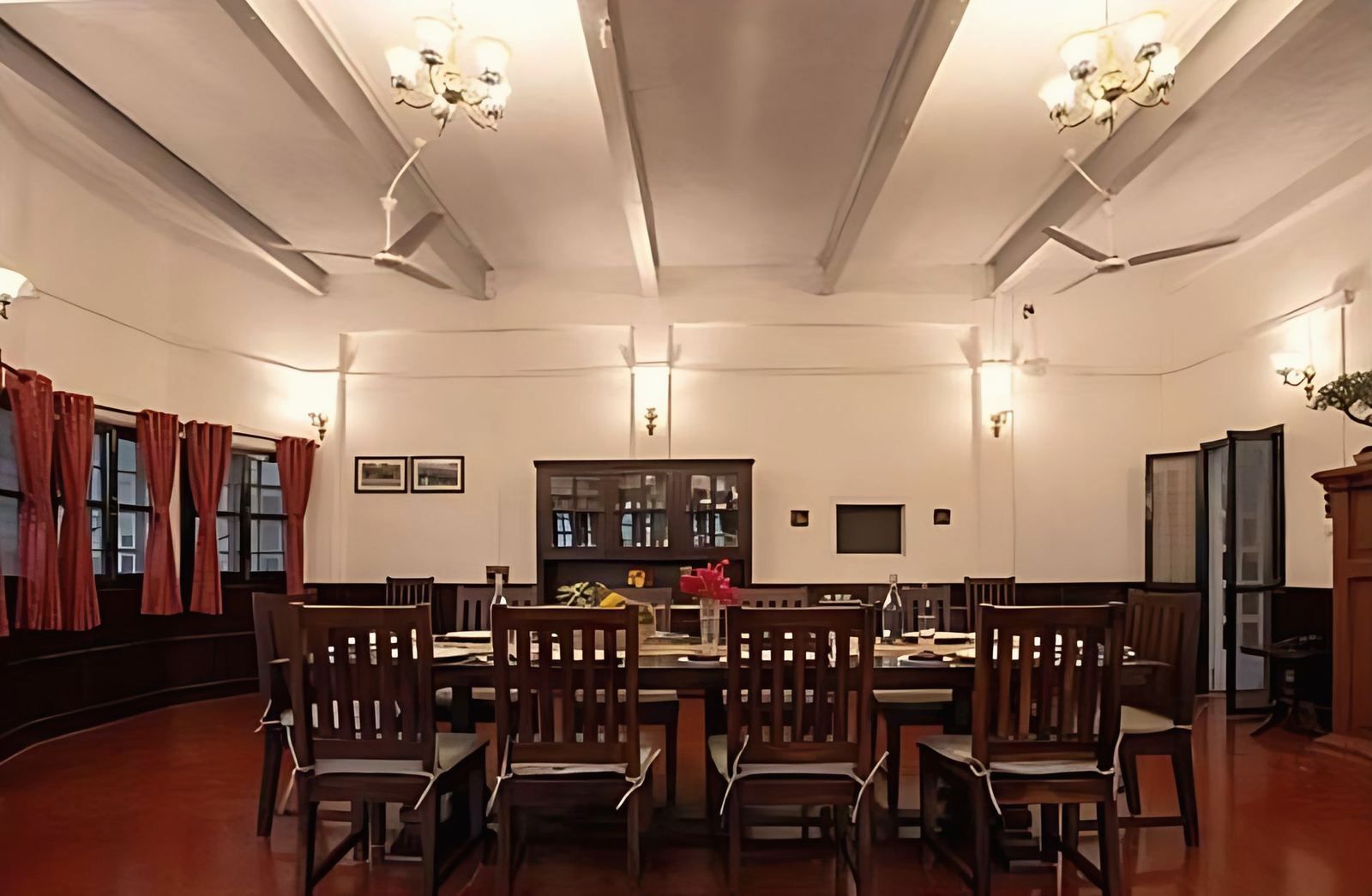
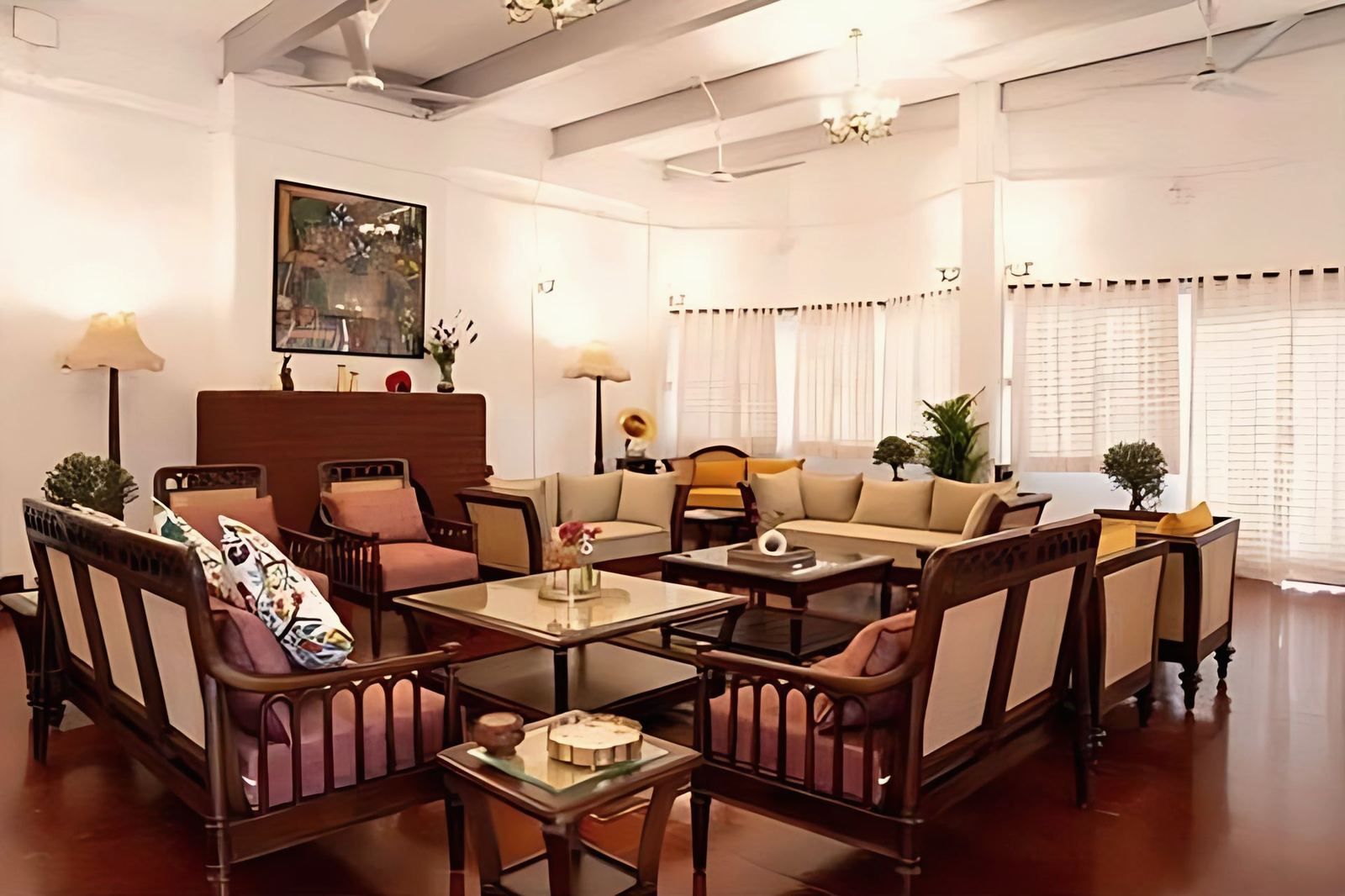
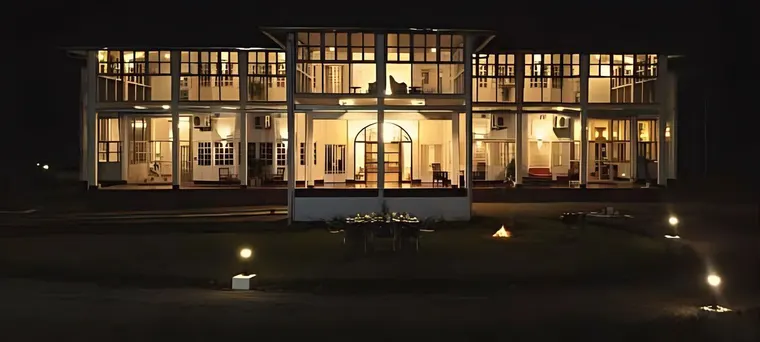
Policy and practice both favour local materials. The West Bengal homestay policy gives preference to local materials, vernacular architecture and renewable energy, and says traditional architecture and local identity are to be preserved wherever feasible. The studio’s Budlapara project shows one way: its colonial character, proportions, glazed verandahs and red oxide floors were kept, and bathrooms, lighting and furnishings were fitted within them. The posts on Bengal vernacular architecture and Assam-type houses describe the forms. For fire, the West Bengal Urban Development and Municipal Affairs page requires a fire safety recommendation for non-residential buildings of any height. It does not say whether a resort is treated as non-residential, so ask the Fire and Emergency Services.
What to do next
Before you buy a hill plot or a tea-estate building, get the slope measured, ask the local body for the hill-area rules that apply, and check the tourism category for the number of rooms you plan. The studio’s heritage conservation and landscape design pages describe relevant work, the Siliguri and North Bengal page covers the region, and you can write through the contact page.