A project management consultant (PMC) is an independent professional or firm that the owner appoints to manage a building project’s delivery. It plans the schedule, helps with tenders, checks quality, measures work and certifies bills. A PMC does not design or build. There is no fixed tariff for the fee.
What is a PMC in construction?
A PMC is an independent party who sits in the owner’s chair on site. Studio Matrx’s 2026 guide describes the PMC as appointed to manage delivery on the owner’s behalf, answerable to the owner and not to the contractor. The consultant does not design the building and does not build it.
PMC also abbreviates municipal corporations in some cities, and tender notices mix the two meanings. In this post the term means project management consultant.
What does a PMC do on a building project?
The scope runs across the whole build, and the exact list is whatever the written agreement says. A typical scope covers these tasks:

| Task | What it means for the owner |
|---|---|
| Planning and scheduling | A realistic timeline and a cash-flow plan, with milestones |
| Tender support | Checking the bill of quantities, comparing quotations and shortlisting contractors |
| Quality inspection | Checking work at each stage against drawings and specification |
| Measurement and bill certification | Paying only for work that is done, at the agreed rates |
| Coordination | One person who chases the architect, contractor, vendors and approvals |
| Reporting | Regular progress, cost and time reports to the owner |
Of these, Studio Matrx calls measurement and bill certification the most valuable for a homeowner, because it is the main protection against overpayment. The post on the bill of quantities and contractor selection explains the measurement basis that certification relies on.
What is the difference between a PMC and an architect?
The roles overlap on site, and the difference is in how much management you buy. An architect who supervises visits the site, checks that the work follows the drawings and specification, and answers design queries. A PMC adds independent measurement and certification of every running bill, and the management of schedule, vendors and cash flow.
| Aspect | Architect supervision | Dedicated PMC |
|---|---|---|
| Design and technical decisions | Architect | Architect, with the PMC coordinating |
| Quality checks on site | Against the architect’s drawings | PMC checks, with the architect’s design checks |
| Measurement and bill certification | Only if it is in the scope | A core PMC task |
| Cost | Part of the architect’s fee | A separate fee by agreement |
The Council of Architecture scale, as reproduced here, lists verification and certification of the contractor’s bills at 1% in addition to the architect’s fee, which shows that bill certification can sit inside an architect’s appointment if agreed. The post on architect vs civil engineer vs contractor covers the other roles, and the one on site supervision lists the stage checks a supervisor makes.
How are PMC charges set?
There is no fixed tariff, and a single national rate is a guess. Studio Matrx describes two common structures for home projects:
- A percentage of project cost. It scales with the build, and the guide describes it as a low-single-digit to mid-single-digit band, depending on scope and size. A percentage can reward a higher cost, so the agreement should say how that is handled.
- A fixed fee. A lump sum for the engagement or a monthly retainer for the expected duration, against a defined scope.
Whichever you choose, tie the fee to the scope: which services are included, how often visits happen, which reports you get and what happens if the build runs long. Get quotations from two or three PMCs for the same scope so they compare. These are indicative figures from one guide, so confirm them with the consultants you approach.
How do government projects use a PMC?
Public projects write the PMC’s role into the contract. The Government of India’s Manual for Procurement of Works (updated June 2022) says in section 7.6 that:
- The role of the PMC should be clearly defined in the contracts.
- Deploying a PMC does not absolve the project executing authority of its responsibility to supervise the quality and timelines of the project.
- The credentials and deployment schedule of the key technical personnel the PMC will engage should be taken along with the bid, and their deployment checked during execution.
- Execution is primarily the responsibility of the officials designated for it, and for large contracts senior officers review progress and quality at stages.
The CPWD Works Manual 2022 points the same way. It tells CPWD to engage private architects and consultants from a panel prepared with guidance from the Ministry of Finance’s Manual for Procurement of Consultancy and Other Services 2017. It requires structural and services designs by a consultant to be authenticated “Good for Construction” by a CPWD engineer before they reach the contractor. Where a consultant is engaged, it says the overall responsibility for handing over the as-built drawings of services stays with the Engineer-in-Charge.
For private owners the lesson is the same: a PMC adds independent checking but the owner remains answerable for the project. The studio’s page on public and corporate work describes the institutional side of its practice, and the post on architectural consultancy for government projects covers empanelment.
When do commercial and institutional projects need a PMC?
A PMC earns its fee where the building is large, the owner is remote or busy, or many trades and bills have to be coordinated. Projects of that kind in the studio’s portfolio include:

- MHMS School, Kudghat: 68,566 sq ft of built-up area over ground and three floors, the largest building in the studio’s portfolio.
- Nursing College, Lauhati: 34,389 sq ft over ground and four floors at 62 ft, for Desun.
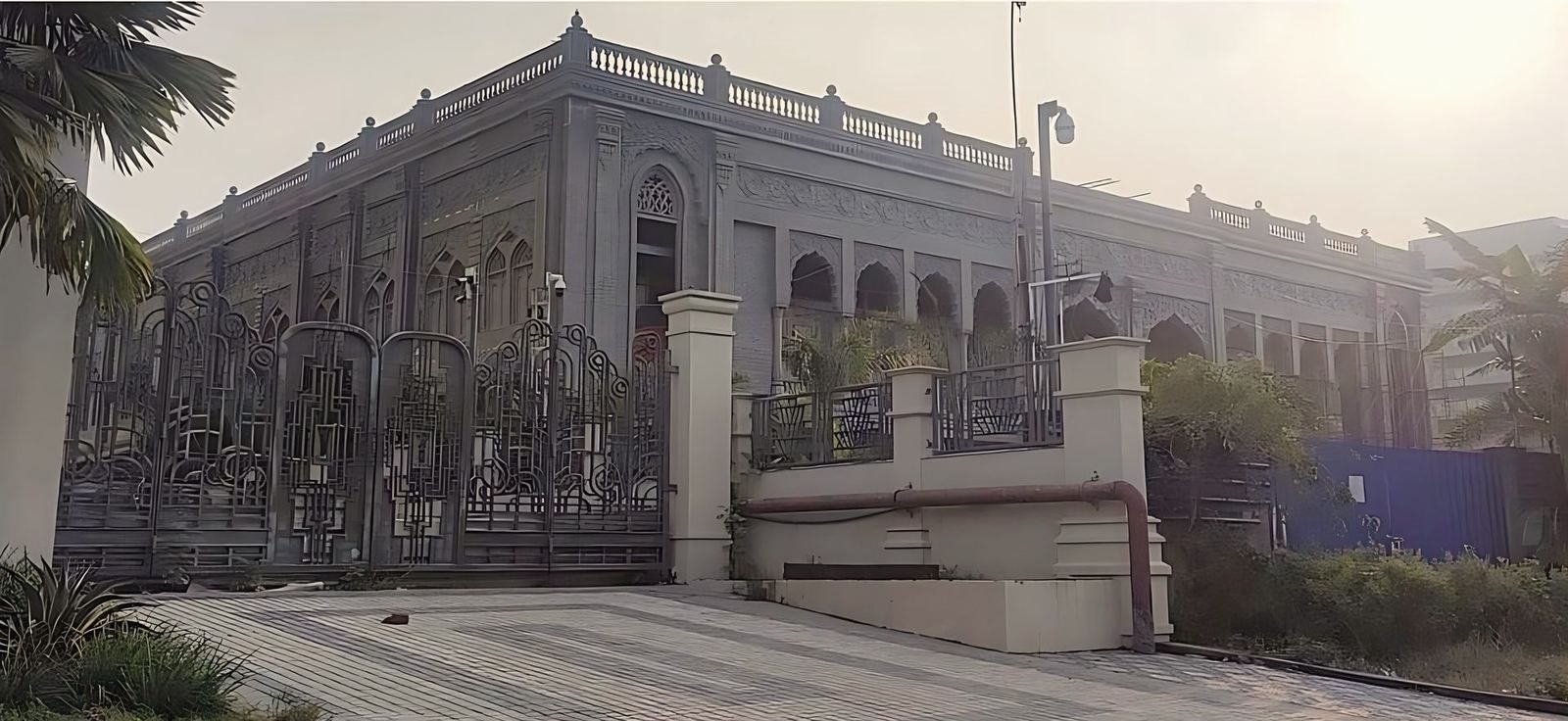
- Banquet hall, New Town: a long-span steel roof over a column-free hall on a site of 61,569 sq ft, under construction.
The studio’s scope on each of these is architectural design, as listed on the project pages. They illustrate the scale at which owners weigh the extra layer of management. On a small, simple house with a nearby owner and an architect supervising well, a PMC is often an extra cost without much gain.
How should I appoint and brief a PMC?
Treat the appointment as carefully as that of the architect or the contractor.
- Write the scope: which tasks, how often the PMC visits and what reports you receive.
- Check their record on projects like yours, and ask to speak to past clients.
- Confirm independence. The appointment should come from you and not from the contractor.
- Ask who the key people are and how much time each will spend on your site, as the government manual asks of public bidders.
- Decide how bills are measured, certified and disputed.
- Fix the fee model in writing, and have the agreement read by a lawyer.
What to do next
If you are weighing a PMC for a larger project, start by listing which of the tasks above your architect and your own team already cover. The studio’s site supervision and project management page describes that service, and questions about a specific project can go through the contact page.