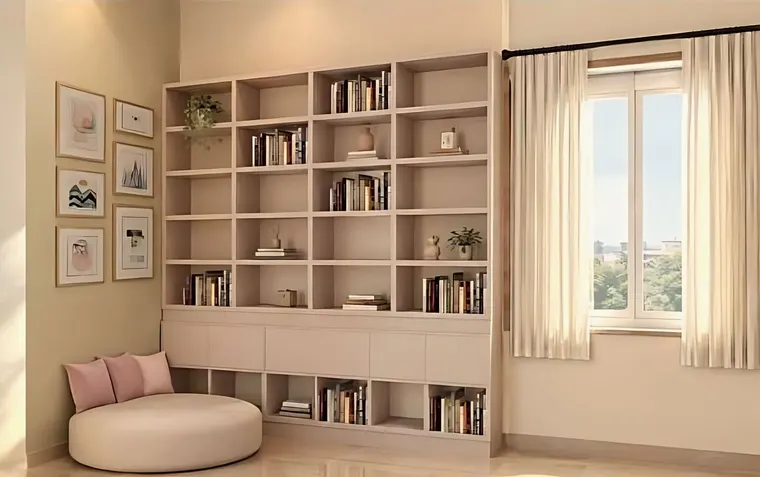
The 2026 trends in Indian interiors are soft, warm whites after Pantone named Cloud Dancer its colour of the year, Japandi and minimalist styling, and compact homes planned with built-in storage. In Kolkata, where mean humidity is about 69% and peaks near 83% in August, wood, cane and plywood need sealed finishes and dry detailing to last.
What are the interior design trends for 2026 in India?
Design media and Pantone’s colour announcement point the same way: calmer rooms. The table lists the trends reported in the sources and a Kolkata caveat for each. These are reported trends, not measurements, and trend coverage in lifestyle media is commentary.
| Trend | What the sources say | Kolkata caveat |
|---|---|---|
| Soft white palette | Pantone named Cloud Dancer (PANTONE 11-4201) its 2026 colour of the year; coverage describes a soft, grey-toned white | White shows damp stains and mould sooner, so the wall behind it must be dry |
| Warm minimalism | Coverage reads the colour as a move toward minimalism and a “soft luxury” mood for Indian homes | Minimal means little storage space for festival and monsoon needs unless it is built in |
| Japandi | A blend of Japanese and Scandinavian design with natural materials and a pared-back palette | Natural wood and cane react to humidity |
| Compact homes | Coverage frames Cloud Dancer as suited to smaller homes that double as workspaces | Space-saving furniture must handle moisture and heavy daily use |
Print Week reports that the colour is expected to shape home decor, fashion and industrial design (Print Week India). Surfaces Reporter calls it a soft, grey-toned white that suggests clarity and balance (Surfaces Reporter). The designer Bindu Gopal Rao argues that in Indian homes, which layer craft, art and material richness, a warm, nuanced white grounds the space (Bindu Gopal Rao).
What is Japandi, and does it suit an Indian flat?
Japandi is an interior style that blends Japanese and Scandinavian design. According to Wikipedia, the term emerged around 2016 and the style uses natural materials such as stone, paper, bamboo and wood, with an off-white, beige or soft grey palette, low furniture and warm, indirect lighting.
It suits Indian flats in one respect: it asks for fewer, better pieces and clear surfaces, which helps in rooms of 300 to 600 sq ft. It does not suit them automatically in two others. Japandi assumes a lot of empty floor, and an Indian household often has guests, puja items and festival linen that need a place. It also leans on bare wood, which is the material most affected by Kolkata’s air. The adaptation is to keep the palette and the calm, and to put the storage behind closed doors.
Which materials survive Kolkata’s humidity?
The ones that tolerate moisture and dry out cleanly. The 1991 to 2020 normals at Alipore, tabulated on Wikipedia, give a mean relative humidity of 69%, with monthly means as high as 83% in August and about 1,813 mm of rain a year, mostly from June to September. Interior finishes see that air for months at a time.
| Material | Behaviour in humid air | Practical advice |
|---|---|---|
| Stone, tile, terrazzo | Unaffected | Good for floors, kitchens and bathroom walls |
| Metal, glass | Unaffected, though some metals corrode near the coast | Use sealed or coated metal |
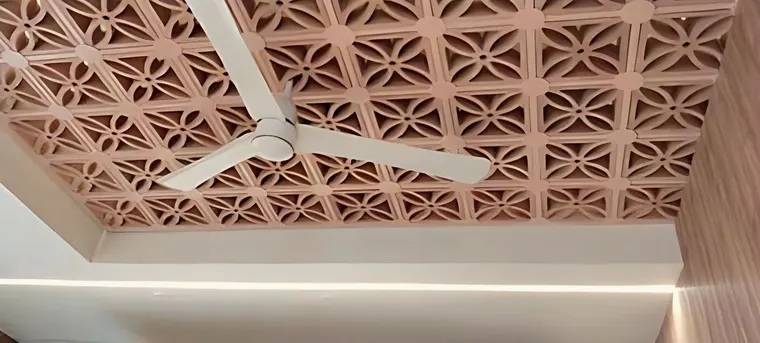
| Terracotta | Tolerates damp; dries out | Works as jaali, screens and floors |
| Solid wood | Takes up and loses moisture, so it can swell and warp | Seal all faces, including the back and the end grain; keep it off damp walls |
| Cane and bamboo | Can mould and sag | Use in the dry parts of the flat and keep clear of external walls |
| Plywood and laminate boards | Open edges swell | Specify moisture-resistant boards and seal the edges |
| Paint and plaster | Peel where the wall is damp | Fix the leak and let the wall dry first |
The best interior depends on the wall behind it, which is why the damp problem comes first. See damp and seepage in Kolkata houses for the causes. A new finish on a damp wall fails within a season.
How do you plan a compact home?
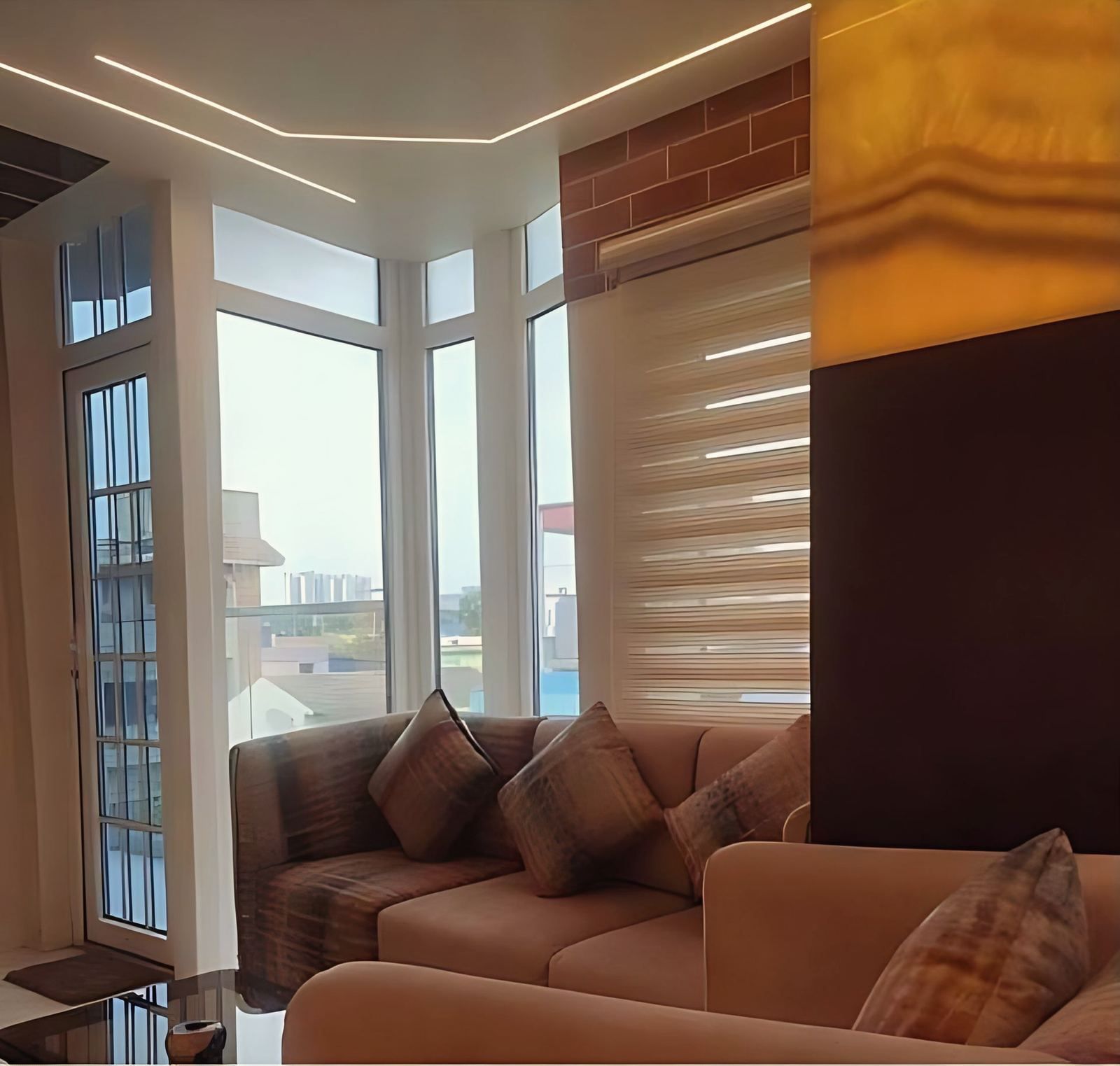
By designing the furniture and the room as one. The studio’s Muchipara studio apartment is a single room of 457 sq ft that had to hold living, sleeping, cooking and storage. Instead of dividing it, the studio designed the furniture and interior as one piece, so that each element also does the work of a wall. A bed folds into the wall when the room is needed for the day, wardrobes close behind sliding doors, an L-shaped sofa runs along the window, and a backlit onyx panel gives the room its single point of light. A terracotta jaali covers the ceiling. It is a completed project, with scope from interior design to custom furniture. See the studio apartment in Muchipara.
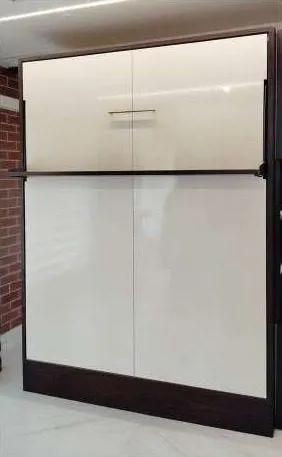
Four habits make a small flat work.
- Build the storage into the walls and the furniture, and keep the floor clear.
- Give each piece two jobs: a bed that folds away, a bench that opens, a table that slides.
- Use one point of light and focus per room, so the eye has somewhere to rest.
- Pick a limited set of materials and repeat them.
How do trends apply in a larger flat?
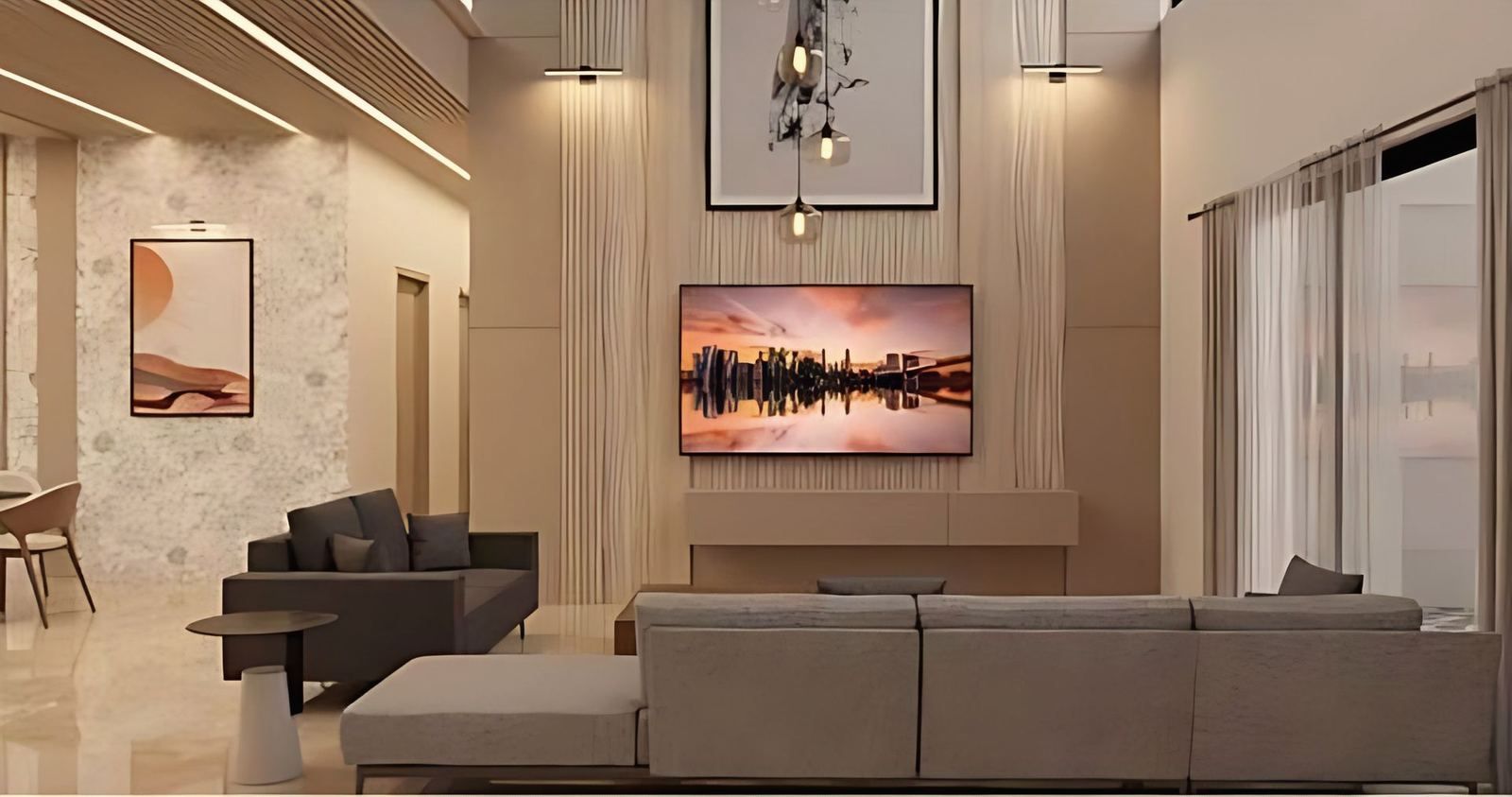
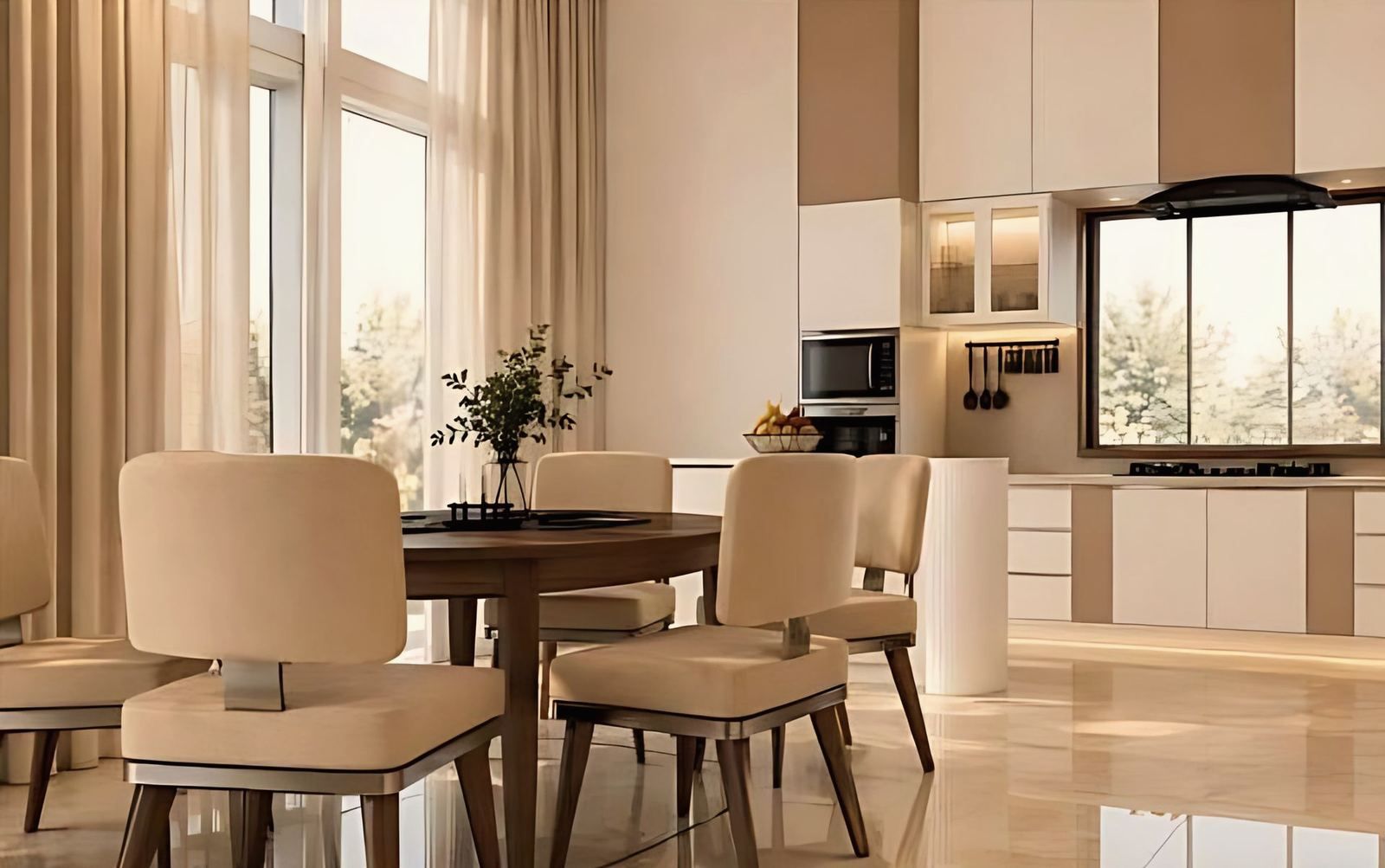
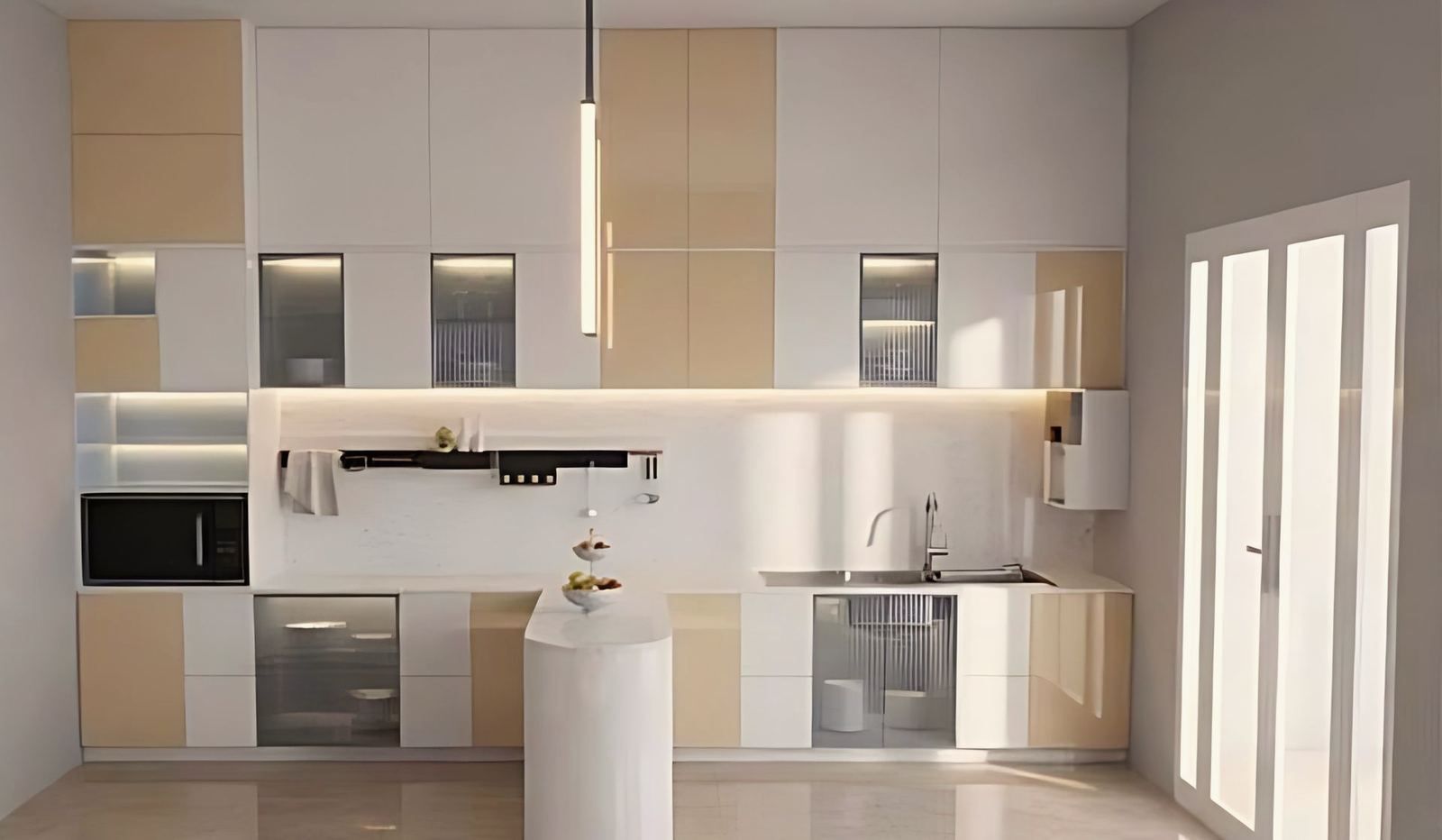
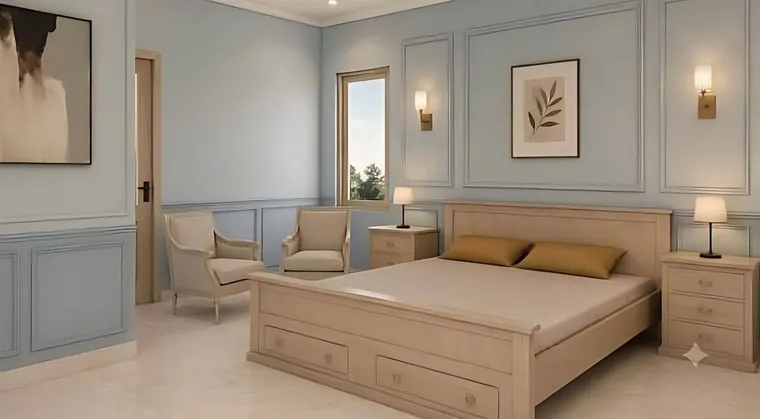
The same ideas scale. The studio’s Skydale Tower duplex in Siliguri has 2,441 sq ft over the 17th and 18th floors, with living and dining rooms, kitchens, a lounge, a study nook, a puja room and a living room with a swing. At that size the question changes from saving space to organising it, so each room is resolved down to its furniture and lighting, and a consistent palette ties the two floors together. The project is ongoing and shown in visualisation. See the Skydale Tower duplex and the post on duplex house design in India.
What should you check in a flat before spending on interiors?
Check the shell first, because a trend finish cannot fix a wet wall. Walk the flat after rain, or ask to see it in July or August, and look for the following.
- Stains or peeling paint on the ceiling, which can point to a leak from the terrace or the flat above.
- Bubbling or powdery deposits at the foot of external walls, a sign that moisture is moving through the wall and leaving salts behind.
- Bathroom and kitchen walls shared with a bedroom, where a hidden leak shows first as a stain or a swollen skirting.
- Window frames and sills that hold water instead of shedding it.
- Cupboards on external walls, which trap damp air behind them.
If you find any of these, have the cause repaired and the wall dried before the carpentry and paint go in. A designer can then specify the palette and the boards around a dry shell, which is cheaper than redoing fixed furniture.
What should you do next?
If you are planning the interior of a flat or a house in Kolkata, North Bengal or Assam, the studio’s interior design service covers layouts, mood boards, 3D visualisation and custom furniture, and the contact page has its phone, email and form.