Lime plaster hardens slowly by drying and by taking up carbon dioxide from the air. IS 2394 asks for one coat for an ordinary finish and two for a high class finish, seven days of wet curing, and a coat that is never stronger than the one below it. It suits old lime-and-brick walls and fails under heavy rain, quick drying or a layer of strong cement.
What is lime plaster?
Lime plaster is a wall finish whose binder is lime, mixed with sand or with a pozzolana such as surkhi, which is ground burnt brick. IS 2394 of 1984 says that “the plaster hardens by drying and by recarbonation”, and calls this a slow process. Sahapedia’s account of the South Park Street Cemetery in Kolkata says its tombs are brick in lime-surkhi mortar.
IS 712 of 1984, the standard for building limes, states in its foreword that lime structures about 2,000 years old have withstood the ravages of time. It also notes that poor slaking and adulteration led to lime being discouraged to a large extent.
Which lime goes where?
IS 712 sorts building limes into classes by what they are made from and how they set.
| Class | Type | Use named in the standard |
|---|---|---|
| A | Eminently hydraulic | Structural use |
| B | Semi-hydraulic | Masonry mortar, lime concrete, plaster undercoat |
| C | Fat lime | Finishing coats and whitewash, and with pozzolanic additions for masonry mortar |
| D | Magnesium or dolomitic lime | Listed by the standard |
| E | Kankar lime | Masonry mortar |
| F | Siliceous dolomitic | Undercoat and finishing coat |
Fat lime, class C, is the finishing lime in the standard, and it is combined with a pozzolana for masonry mortar.
How is lime prepared on site?
IS 1635 of 1992 covers field slaking. The lime is slaked by adding it to water in a brick-lined tank, or on a platform with a layer 150 mm deep. The milk of lime is passed through a 3.35 mm sieve. The putty is then matured:
- Fat lime, classes C and D, matures for at least 3 days.
- Classes B and F mature for not more than 2 days.
- Lime slaked on a platform stands for at least 16 hours (C, D) or not more than 12 hours (B, F) before it is made into putty.
- The putty is stored under water. Dry hydrate can be stored for up to 2 months.
How many coats, how thick and in what mix?
IS 2394 says one coat is adequate for an ordinary finish and two for a high class finish, and three for a very rough background. The thicknesses are:
| Background | Single coat | Double coat | Very rough |
|---|---|---|---|
| Brick masonry | 15 mm | 10 mm and 10 mm | Not stated |
| Stone masonry | Not stated | 15 mm and 10 mm | 15, 10 and 10 mm |
The mixes in the standard are by volume:
| Coat | Mix | Lime class |
|---|---|---|
| Dubbing and first coat | 1 lime to 2 or 3 sand | A and B |
| First coat | 1 lime, 1 pozzolana and 1 to 2 sand, or 1 lime to 2 or 3 pozzolana | C |
| Second coat | 1 lime, 1 pozzolana and 2 to 3 sand | C |
| Finishing coat, called neeru | Lime and fine sand in equal proportions | C |
Joints in the wall are raked to at least 12 mm before plastering, and the next coat goes on after the first has set, which the standard puts at 3 to 5 days depending on the weather. Mortar left unused is rejected after 72 hours for lime mortar and after 24 hours for lime-pozzolana mortar.
How does lime plaster cure?
Curing starts 24 hours after the finish coat and the plaster is kept wet for 7 days. Because the plaster hardens slowly, the standard treats curing as part of the work, and it also says not to apply cement-based paint over lime plaster.
When does lime plaster fail?
IS 2394 lists the causes of cracking: quick drying, a strong mix applied to a weak background, poor bond, masonry that has not finished shrinking, joints that were not raked, and a break between different materials. Its rule for avoiding the main cause is that no coat of plaster should be stronger than the base or the previous coat.
The standard also says lime plaster is not suitable for external surfaces in areas of heavy rainfall or in very damp places. Kolkata’s average annual rainfall is 1,713.5 mm at Alipore, according to the India Meteorological Department, so external lime work needs careful detailing and a specialist’s advice. The guide to damp and seepage in Kolkata houses explains how water enters walls.
Why does cement over old lime walls cause damage?
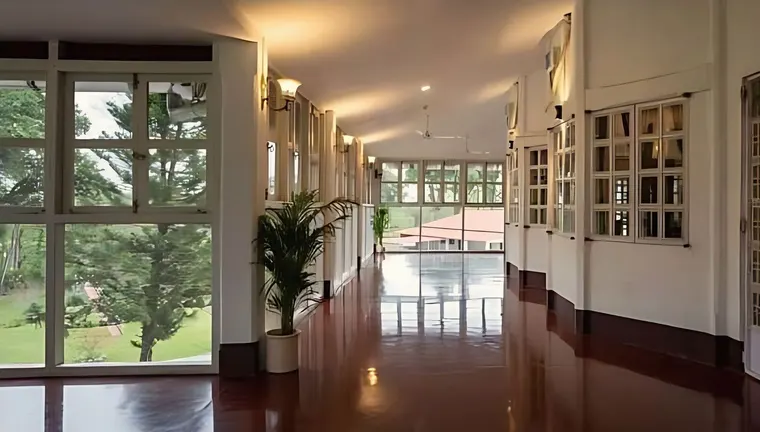
Cement plaster is stronger and less able to move than old lime work, and it can trap moisture and salts. A paper from the Central Building Research Institute and CSIR on the Forest Research Institute buildings in Dehradun says that cement is incompatible with many ancient materials because of soluble salts such as calcium sulphates and sodium salts, and that cement-based mortar restrains movement and leads to stress that causes failure in the original masonry. The same paper found lime-surkhi very suitable for repair, using a binder to aggregate ratio of 1:2.5 by weight. The building was in Dehradun, not Kolkata, so treat it as a lesson in method.
The policy for protected monuments agrees. The Comptroller and Auditor General’s Report 18 of 2013 states that the Archaeological Survey of India prohibited the use of cement on monuments, and that John Marshall’s conservation manual instructed the same. The audit found cement used at 64 monuments. The Kolkata work at the South Park Street Cemetery shows the practice: the repair list begins with complete removal of dead mortar and cement coating, and the work follows the conservation manual in lime-surkhi mortar.
When should you choose lime over cement?
Choose lime when the wall is old and made of brick in lime mortar, when the building is graded or protected, or when you want a finish that moves with the wall. Choose cement for new structural work, for external walls in strong rain and for wet areas. A mixed approach is common, with lime inside and a specialist’s decision outside.
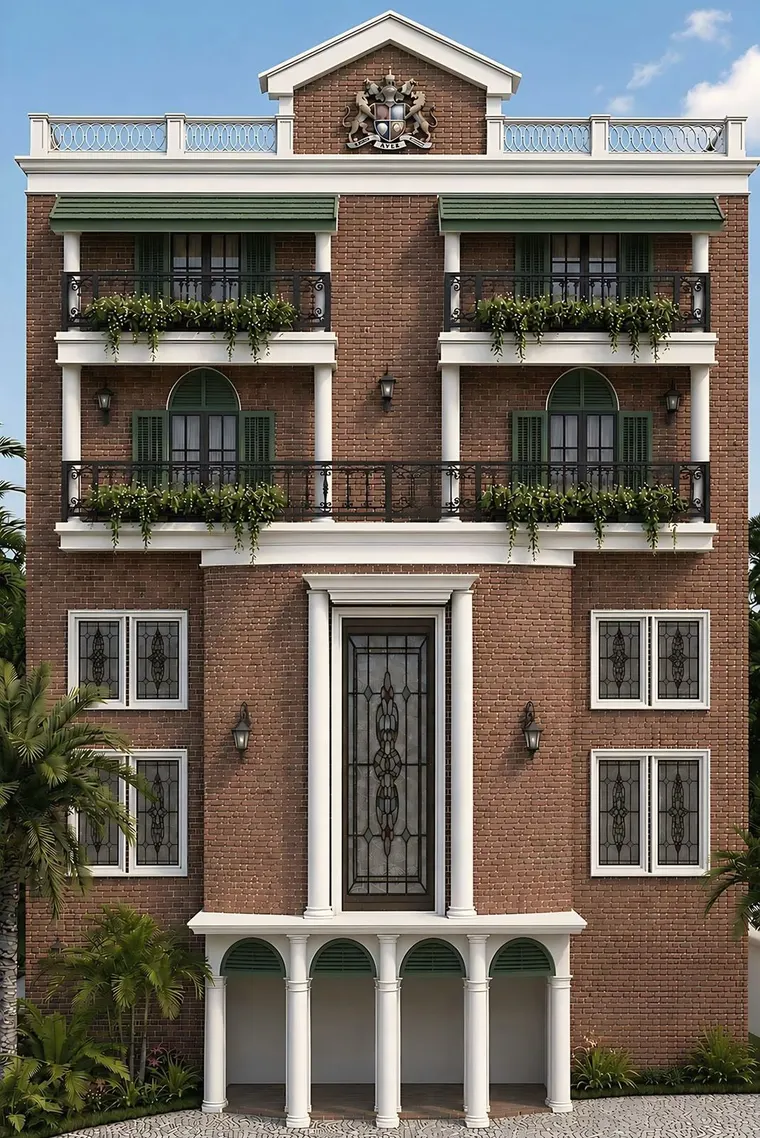
The studio’s heritage conservation service covers the specification of plaster and mortar, and the guides to heritage building restoration in Kolkata and renovating an old house explain what to do first. Before any repair, ask for a condition survey of the walls.
To discuss an old building, use the contact page.